

- a) Name and registration code of the study programme:
- Internal diseases of animals · 103922 · UIPŠ 4314V00
- b) Degree of study and ISCED level:
- Third degree · ISCED 8
- c) Place of delivery:
- University of Veterinary Medicine and Pharmacy in Košice · Komenského 73, 041 81 Košice
- d) Field of study and ISCED-F code:
- Veterinary Medicine
- e) Type of study programme:
- Single degree study
- f) Awarded academic degree:
- PhD (philosophiae doctor)
- g) Form of study:
- part-time study
- h) Partner universities and distribution of study obligations in a joint study programme
- i) Language of instruction:
- Slovak language
- j) Standard duration of study:
- 5 years
- k) Programme capacity and applicants over the last six academic years
-
Planned student capacity Applicants over the last 6 academic years Admitted students over the last 6 academic years Enrolled students over the last 6 academic years — 8 8 8 - l) Information about the study programme:
- Programme details
Study programme description
Internal diseases of animals
part-time study ·  · 103922 · 2023/2024
Last updated: 30.10.2026
- Higher education institution
- University of Veterinary Medicine and Pharmacy in Košice
- Registered address
- Komenského 73, 041 81 Košice
- Institution identification number
- 00397474
- Programme approval body
- UVMP Accreditation Commission in Košice
- Approval date
- 27.08.2024
- Last assessment date
- 2015-10-30
- Last assessment and related information
- Decision No 2015-18852/46464:2-15A0 of 30.10.2015, time-limited award (§ 83(7)) until 31.8.2020
1. Basic data on the study programme
2. Profile of a graduate and aims of education
- a) Educational objectives and main learning outcomes
-
- The professional profile of the graduate includes general characteristics, required practical and theoretical knowledge, specification of the core of knowledge in the study programme of internal diseases of animals in the study and scientific part. The graduate is proficient in the scientific methods and methodology of research and development in the field of the study programme in internal animal diseases, which focuses on the production and public health aspects of the disease complex of livestock, horses, small animals with regard to dogs, cats, fur-bearing animals and other small mammals and reptiles. In the broad field of avian medicine, similar knowledge criteria are required for extensive and intensive poultry farming, including farmed ostriches, turkeys and waterfowl, wild and domesticated avian species - pigeons and exotics. The above criteria are from the diagnostic, preventive and therapeutic aspects of pathogenesis, nutrition, disorders of homeostasis and epidemiology, which are related to the theoretical and practical ability of the graduate necessary for the implementation of targeted scientific research work. In a comprehensive view, the doctoral graduate develops creative scientific research activity and the possibilities of its application in practical and experimental conditions in diagnostic, therapeutic and preventive procedures in terms of animal health and productive capacity, the economic impact of serious internal diseases and human health. The graduate knows the methodology of analytical work, procedures of processing, objective evaluation of interpretation of results and analyses. He/she knows the methods and scientific and practical procedures in the application of current and new knowledge, proposals and recommendations based on veterinary medical legal knowledge in the field of veterinary care, ethics and ethology as well as interdisciplinary contexts (pathological anatomy, toxicology, epidemiology, food hygiene, breeding and environment and others) resulting from the criteria of the work and the course matter in the conditions of the Slovak Republic with a good orientation in the scientific, theoretical and practical part of the global significance.
- Theoretical knowledge of the graduate in the study programme of internal animal diseases: methodological and methodological readiness for own solution of a topic in the field of a specific discipline by including closely related interdisciplinary links (veterinary physiology, pathophysiology, pathological anatomy, biochemistry, pharmacology, toxicology, immunology, nutrition and dietetics) included in the study programme; the graduate develops, deepens and masters the methodology of analytical work, procedures of processing and interpretation of the obtained results in experimental and practical conditions in qualitative and quantitative evaluation. Practical readiness and general skills of the graduate in the study programme of internal animal diseases: The graduate demonstrates readiness for scientific work, both knowledge-based and practical; follows the continuity of scientific research results and their transfer in practice; demonstrates the ability of correct scientific formulation of problems, processing and interpretation of results in the form of publications (carentered and non-carentered scientific and professional journals), conferences, congresses and symposiums of domestic and international importance; the ability to present and apply the results in the educational process and in the development of the study programme and in social practice; knowledge of the ethical, environmental and economic-legal aspects of the current application of new diagnostic, therapeutic and preventive procedures.
Doctoral thesis in credit and scope presents the ability of the graduate to independently acquire theoretical and practical scientific knowledge based on the current state of scientific knowledge and especially the graduate's own contribution to it by creative activity in the study programme of internal diseases of animals with the application of the latest scientific knowledge in the course matter of the doctoral thesis. The core of knowledge of the study programme of internal animal diseases in the 3rd stage of higher education is divided into the following framework topics: in the study and scientific part.
- b) Occupations and graduate employment opportunities
- Not provided yet.
- c) Statements of relevant external stakeholders
-
Company or external stakeholder Statement Komora veterinárnych lekárov Slovenskej republiky View
3. Job prospects
- a) Assessment of graduate employability
-
- On the basis of the previous long experience with graduates of the study programme of internal animal diseases, it can be stated that graduates find employment in all veterinary educational institutions, specialized research institutes, national and international organizations operating in the field of animal production, animal welfare, as well as the pharmaceutical industry (research, development and promotion of products for animals).
- b) Examples of successful graduates
-
Examples of successful graduates of the study programme of internal animal diseases in the full-time form: There have been no graduates so far in the part-time study programme in Internal Animal Diseases offered in English.
- c) Employer feedback on programme quality
-
Employers' evaluation of the quality of the study programme (feedback): Employers' evaluation of the quality of the study programme (feedback): However, the quality of the study programme can be positively evaluated indirectly on the basis of the interest of graduates of the second cycle of higher education from different areas (medical and pharmaceutical sciences, natural sciences and agricultural sciences) in this study programme. UVMP has prepared questionnaires about graduates for employers.
4. Structure and content of the study programme
- a) Rules for designing study plans
-
- The rules for the formation of study plans in the study programme Internal Animal Diseases are based on the general provisions contained in Article 8 of the Internal Regulations of the Study Regulations of the UVMP in Košice, Part B.
- b) Recommended study plan:
- Study plan 2023/2024
- c) Information included in the study plan
-
Course information sheets for the Internal diseases of animals study programme are available through links directly in the study plan.
- d) Credits and other requirements for completion of study
- Not provided yet.
- e) Requirements for individual programme components and student progression
- Not provided yet.
- f) Assessment of learning outcomes and appeal procedures
- Not provided yet.
- g) Recognition of studies or parts of studies
- Not provided yet.
- h) Thesis topics
-
Thesis topics and supervisors are listed in Table 2 in section 7.e of this description.
- i) Other study rules and procedures
-
UVMP in Košice has described the rules for the verification of learning outcomes and evaluation of students and the possibilities of corrective procedures against this evaluation in Articles 17, 18 and 25 of the internal regulation Study Regulations of UVMP in Košice, Part B.
- Conditions for the recognition of studies or part of studies:
UVMP in Košice has regulated the conditions for recognition of studies or part of studies in Articles 19, 38 and 42 of the internal regulation Study Regulations of UVMP in Košice, Part B.
- Topics of the final theses of the study programme:
UVMP in Košice annually publishes a list of themes of the final theses of the study programme of internal animal diseases in a tabular overview as well as on the UVMP in Košice website.
In the study programme Internal diseases of animals offered in English in the part-time form of study, no topic has been announced so far.
- UVMP in Košice has described:
- the rules for assigning, processing, opposing, defending and evaluating final theses in Articles 1, 8, 9, 10, 25, 26, 27 and 28 of the internal regulation Study Regulations of the UVMP in Košice, Part B,
- possibilities and procedures for participation in student mobility in Article 42 of the internal regulation Study Regulations of UVMP in Košice, Part B,
- rules of observing academic ethics and drawing consequences in the internal regulation Disciplinary Regulations for Students of the University of Veterinary Medicine and Pharmacy in Košice, in the internal regulation Code of Ethics of UVMP Employees and in the internal regulation Code of Ethics of UVMP Students,
- procedures applicable to students with special needs in Part II, Article 2, point 7; Article 3, point 12 of the internal regulation Study Regulations of the UVMP in Košice, Part B,
- the procedures for filing complaints and appeals by the student are specified, in addition to the Study Regulations of UVMP in Košice, in particular in the internal regulation Directive on the handling of complaints at UVMP in Košice.
5. Study programme’s information letters
- Course information sheets
-
Course information sheets are available through links directly in the study plan. Study plan 2023/2024
6. Current schedule of the academic year and current timetables
- Current academic calendar and timetables
- Not provided yet.
7. Staff
- a) Person responsible for the delivery, development and quality of the study programme
- Prof. Pavol Mudroň, DVM, PhD, Dip. ECBHM
- b) Teachers of profile courses
- c) Research/art/teaching profiles of teachers of profile courses
- d) Teachers, courses and links to the central register of university employees
-
(Click the teacher’s name to open their profile and contact details, where available.)
- e) Thesis supervisors and topics 5 years
-
(Click the teacher’s name to open their profile and contact details, where available.)
Table 2 – Thesis supervisors and topics Teacher Thesis topics Academic year Csilla Tóthová, DVM, PhD Assessment of association between plasma FGF-23 and plasma SDMA concentration in the non-azotemic cats and cats of different severity CKD 2022/2023 Prof. Igor Valocký, DVM, PhD Echocardiographic assessment of equine cardiac dimensions and indices of cardiac funcion in relation to age 2022/2023 Assoc. prof. Juraj Toporčák, DVM, PhD Dermatophytosis of small mammals and possibilities of their therapy 2019/2020 Prof. Miroslav Svoboda, DVM, CSc. New findings in allergen diagnosis and therapy of skin diseases in dogs 2019/2020 Prof. Pavol Mudroň, DVM, PhD, Dip. ECBHM Use of selected laboratory diagnostic methods for identifying health disorders in dogs 2019/2020 - f) Research/art/teaching profiles of thesis supervisors
-
The supervisors’ research/art/teaching profiles are available through their personal profiles using the name buttons in the preceding table.
- g) Student representatives and contacts
-
The members of the committee for the preparation of study programmes for the third level of higher education are students Marek Ratvay, DVM (3rd year of SP Immunology); e-mail: marek.ratvay@student.uvlf.sk; Teodora Blatníková, DVM (3rd year of SP Veterinary Morphology and Physiology); e-mail: teodora.blatnikova@student.uvlf.sk and Pavel Gomulec, DVM (1st year of SP Internal Diseases of Animals); e-mail: pavel.gomulec@student.uvlf.sk.
- h) Study adviser
-
Study programme advisor: prof. MVDr. Juraj Pistl, PhD., Vice-Rector for Research and Doctoral Studies at UVMP in Košice (juraj.pistl@uvlf.sk).
- Other study programme support staff - assigned study officer: Mgr. Júlia Jančura, e-mail julia.jancura@uvlf.sk; career counsellor: the function of the career counsellor is performed by the doctoral student's supervisor.
- i) Other support staff
- Not provided yet.
8. Premises, tools and technical equipment
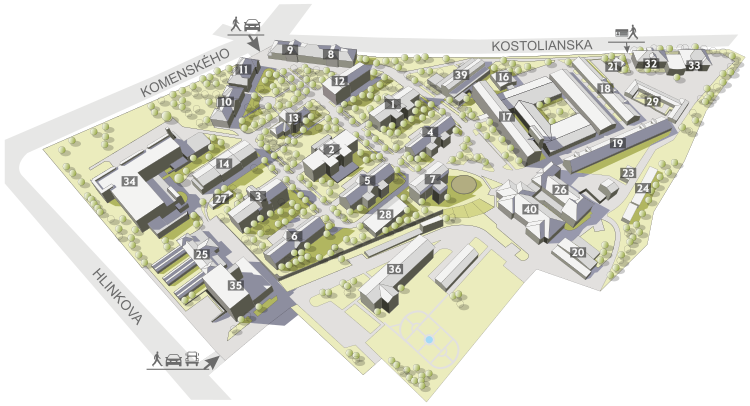
- a) Teaching premises and their technical equipment
-
- List and characteristics of the classrooms of the study programme and their technical equipment with assignment to learning outcomes and course (depending on the workplace of the instructor and course guarantors)
Course
Characteristics of material and technical equipment
Location Metabolic diseases
Automatic Biochemical Analyzer Alizé - Lisabio, France
Hematology analyzer BC 2800Vet, Mindray
Spectrophotometer Spekord 210 plus
Electrophoretic analyser Hydrasys Sebia
BEHNK Coagulometer Coagulometer CL-4
Atomic absorption analyzer with flame AAS Analyst 100, Perkin Elmer
Microscope Optics B 192PLi
Laboratory microscopes XSP 151
Hettich laboratory centrifuges
SonoScape ultrasonograph
Fixation cage for small ruminants
Fixation cage for large ruminants
P 17 - 26
P 17 - 25
P 17 - 26
P 17 - 25
P 17 - 25
P 17 - 44
P 17 - 25
P 19 - 1048
P 17 - 26
P 19 - 1046
P 18 - 145
P 19 - 1045
Diseases of the internal organs and musculoskeletal system
Technologically adapted barn for clinical and special diagnostic examination of all categories of pigs
Fixation cages and devices, endoscope, cystoscope, catheters, specula, surgical kit for procedures (castration, ovariectomy, hernias, caesarean section, adjustment and treatment of papillae.
Handy laboratory for urine screening, coprology, dermatology and other rapid laboratory and microscopic examinations
Instruments: ECG, USG, hematological and biochemical analyzer, centrifuge, pH meter
P-19 (stables, room 2025)
P-17 (new training room, lab 19B)
Endocrine and skin diseases
Haematological examinations are performed on the Pro Cyte IDEXX Dx (IDEXX Laboratories, USA). Blood is processed on an Eppendorf centrifuge. Biochemical examinations are performed on a COBAS c 111 analyzer (Hoffmann-La Roche, Switzerland). Endocrinological examinations are performed in the RIA laboratory to evaluate the parameters TT4, fT4, cortisol, progesterone, IGF 1 and 17-β-estradiol. Cytological examinations are assessed on an Olympus microscope.
P40
Production diseases
Material and instrumentation for the analysis of production animal diseases: laboratory centrifuges Hettich, Microscope Optika B 192PLi, laboratory microscopes XSP 151, biochemical examination of blood serum - Spectrophotometer Spekord 210 plus, automatic biochemical analyzer Alizé - Lisabio, France, hematological examinations - automatic hematological analyzer BC 2800Vet, Mindray, specific examination of serum - electrophoretic analyzer Hydrasys Sebia, Coagulometer BEHNK Coagulometer CL-4, examination of animal mineral profile - Atomic absorption analyzer with flame AAS Analyst 100, Perkin Elmer, examination of organs - Ultrasonograph SonoScape, Endoscope Fritz, technical equipment for fixation of animals - fixation cage for small and large ruminants, cage for treatment of hooves of large ruminants
P 17/B
P 18 - 145
P 19 - 1045
Housing compartments P 18 and P 19
Veterinary gastroenterology
Material and technical equipment: colonoscope olympus cf type el, biochemical analyzer Fujifilm Dri-chem NX600, Animal blood counter Vet abc, pH meter Greisinger G 1500 serie, light microscopes - Optika microscopes
P 19
Clinic of pigs
Listening room (room for PhD students) 2025
Pharmacotherapy of internal diseases
Exercise room equipped with data projector and computer
P 4
Pathological morphology of internal organs of animals
Staining machine- histopathology; Laminar boxes/ PCR boxes; microtome-2x, autoclav, CO2 Incubator; thermocycler PCR/ qPCR, homogenizer- Magnalyser; microscopes- optical- Nikon+ camera- Canon; Zeiss fluorescence microscope; cooling, freezing/deep freezing boxes; ultracentrifuge/centrifuge, Canon and Leica digital cameras; Software- morphometric- NIS element advanced 4.0; statistical programs- MiniTab and Graph Pad Prism.
P17
PCR- laboratory
Histological laboratories- Laboratory No. 1
Laboratory No.2
General pathological physiology
Material and equipment for spectrophotometric determinations spectrophotometer (Thermo Electron Corporation, Made in USA), spectrophotometer (VWR International , Made in China), ELISA reader (Apollo LB 913, Germany), FRAS (FRAS BRAVO, H&H Parma Italy), thermostat (Memmert, Made in Germany), freezer (Liebherr - MEDLine, Made in Austria), refrigerator (Gorenje, Made in Slovenia), centrifuge (Eppendorf, Made in Germany), haematological analyses: Hematology analyzer, light microscopes (Carl Zeiss Microscopy, Made in Germany), laminar box.
P8 ground floor
Detection of animal nutritional disorders
Material and equipment for the nutritional evaluation of feeds, compound feeds and rations (dry matter, NL, structural and non-structural carbohydrates, ether extract, minerals) : drying oven, Mufl oven, Kjeltec Analyzer (1030 and 2300), Det Gras Analyzer, Dosi Fiber Analyzer, Ankom, automatic polarimeter AP 300, atomic absorption spectrophotometer, - for dietetic evaluation of feeds, rations: pH meters, semi-automatic titrator ( Titroline 5000), Daisy II incubator.
Material and equipment for the evaluation of the level of carbohydrate fermentation in rumen and intestinal contents (pH, UMK - acetic acid, propionic acid, butyric acid), and in blood serum the level of ketonic substances (acetoacetic acid and β-hydroxybutyric acid):Two-column isotachophoretic analyzer EA100 and EA 101.
Material and equipment for the analysis and evaluation of indicators of protein (total protein, albumin, urea), energy metabolism (triglycerides, NEMK, glucose) and metabolic load status of the liver ( AST, GGT, bilirubin): automatic biochemical analyzer "ELLIPSE", spectrophotometers in the visible and UV region.
P 12,
Laboratory 3,5,6
Physics Laboratory
Animal endocrinology
Material and equipment for histological, immunohistochemical analysis, protein, cholesterol, LDH separation, hormone (P4, PRL, IGF-I), protein and ACHE analysis: Sled microtome, water bath, NIKON E200 light microscope with 15 Mpix color camera and NIS Elements Br software, thermostat, heating plate, vortex, orbital mixer, WTC200 RADWAG precision balance, SD50 waterproof pH tester, HYDRASYS gel electrophoresis with EPSON V700 scanner, Multiscan Ex. photometer, Multiscan Ex. Microplate reader - ELISA reader, centrifuge, mini-centrifuge, GuardOne laminar box, refrigerators, freezers (-20°C), deep freezer (-80°C), fume hood, fully automatic digital hatchery
P8/L1, L2
- Characteristics of information provision of the study programme (access to study literature according to course information sheets), access to information databases
and other information resources, information technology, etc.):
All literary resources for study listed in the fact sheets are available in either print or electronic form, and all information databases purchased and licensed by the University are accessible to students.
- Characteristics and scope of distance learning applied in the curriculum with assignment to courses. Approaches, manuals of e-learning portals. Procedures for transition from full-time to distance learning.
UVMP in Košice has also distance learning for all courses, which is currently provided through MOODLE and MS Teams platforms. Each student has manuals available either in electronic form or in the form of a video tutorial.
- b) Information resources
- Not provided yet.
- c) Distance learning, e-learning access and procedures
- Not provided yet.
- d) Partners involved in educational activities
-
- In the provision of some activities, especially in the field of clinical and field research, the participation of contractual partners is envisaged, including organisations under the management of the State Veterinary and Food Administration of the Slovak Republic, as well as private veterinarians and the Slovak Academy of Sciences.
- Characteristics on social, sporting, cultural, spiritual and social opportunities:
UVMP in Košice provides students with the maximum possible conditions for their enjoyment in the above areas.
- e) Social, sports, cultural, spiritual and community activities
- Not provided yet.
- f) Student mobility and placements
-
Students of the Internal Medicine programme are guaranteed the opportunity to participate in mobility. The whole agenda containing the guidelines and conditions for applying for mobility, the conditions and rules of participation as well as the rules of recognition of participation in mobility as part of the study plan is covered by the Prof. Vice-Rector for International Relations and Internationalisation and the organisational unit managed by her, which is the UVMP Mobility Office. The whole process requires coordination with the supervisor, and is recommended after the study part of the study plan has been completed. Participation in mobility and other contexts are regulated in Article 42 of the Internal Regulations of the Study Regulations of the UVMP in Košice, Part B.
9. Required skills of the applicant and prerequisites
- a) Required abilities and admission prerequisites
-
They are laid down in Article 1 and Article 2, Part B, Part II Organisation of Studies of the Internal Regulations of the Study Regulations of the UVMP in Košice.
- b) Admission procedures
-
Admission procedures: they are laid down in Article 3 and Article 4, Part B, Part II Organisation of Studies of the Internal Regulations of the Study Regulations of the UVMP in Košice. The examination boards for admission examinations are at least 4-member and are appointed by the Rector on an ad hoc basis according to the focus of the study programmes to which students apply.
- c) Admission results over the standard duration of study
-
Academic year Applicants Admitted Enrolled Graduates 2021/2022 2 2 2 — 2020/2021 0 0 0 — 2019/2020 2 2 2 — 2018/2019 3 3 3 — 2017/2018 0 0 0 —
10. Feedback regarding the quality of education provided
- a) Monitoring and assessment of student feedback
-
- Procedures for monitoring and evaluating students' views on the quality of the study programme:
Students of UVMP in Košice have the possibility of anonymous evaluation of the quality of teaching in the Academic Information System, where they evaluate the quality of a particular course and the quality of the teachers who provide that particular course. Monitoring of study programmes is also continuously carried out by the coordinators of individual domains of science and research at UVMP, while 5 domains of science and research are established at UVMP. At the end of the study programme, graduates fill in an anonymous questionnaire evaluating the course of study and cooperation with the supervisor.
- b) Student feedback and measures to improve programme quality
-
The results of the evaluation of doctoral studies are part of the Annual Reports on Scientific and Research Activities at UVMP in Košice for individual ARs and Annual Reports on the Quality of UVMP in Košice for individual ARs. They are also presented at the Teachers' Forum, which is held at the beginning of each academic year. In general, the principle that the results of the feedback are very important for drawing conclusions from the evaluations, which are implemented into concrete measures implemented with the aim of improving the quality of the study programme in its entire breadth and depth.
- c) Graduate feedback and measures to improve programme quality
-
The results of alumni feedback and related measures to improve the quality of the study programme are part of the Annual Reports on Scientific and Research Activities at UVMP in Košice for individual AR and Annual Reports on the Quality of UVMP in Košice for individual AR. The Vice-Rector for Science, Research and Doctoral Studies and the coordinators of the individual domains of science and research act within the framework of measures to improve the quality of the study programme by personally entering into the solution of the problems arising from the results of the feedback.
11. Demonstration of long-term and continuous success in obtaining financial support
- a) Demonstration of long-term and continuous success in obtaining financial support
-
P.no.
Project number
From
To
Project name
Provider
Principal Investigator / Co-Principal Investigator
1
1/0773/11
2011
2013
Analysis and evaluation of mineral metabolism in the soil-plant-animal relationship
SGA
Assoc. Prof. Iveta Maskaľová, DVM PhD.
2
1/0812/12
2012
2014
Application of newer methods in clinical-laboratory diagnosis of livestock diseases
SGA
Prof. Pavol Mudroň, DVM PhD. Dipl. ECBHM
3
1/0812/12
2012
2014
Application of newer methods in clinical-laboratory diagnosis of livestock diseases
SGA
Prof. Peter Reichel, DVM PhD.
4
001UVLF-4/2012
2012
2014
Veterinary cytology
CEGA
Assoc. Prof. Mária Fialkovičová, DVM PhD.
5
1/0812/12
2012
2014
Application of newer methods in clinical-laboratory diagnosis of livestock diseases
SGA
Assoc. Prof. Oskar Nagy, DVM PhD. Dipl. ECBHM
6
1/0313/12
2012
2014
Bacterial intestinal infection in chickens and influence of cytokine levels by application of probiotics
SGA
Assoc. Prof. Martin Levkut, DVM PhD.
7
RDPA-0302-11
2012
2015
Probiotic microorganisms and regulation of cytokine response in the prevention of immunopathological changes during intestinal bacterial infections in poultry
RDPA
Assoc. Prof. Martin Levkut, DVM PhD.
8
1/0613/13
2013
2015
Study of the effect of rooibos and yucca plants on ovarian function
and livestock metabolism
SGA
Assoc. Prof. Radoslava Vlčková, DVM PhD.
9
1/0447/14
2014
2016
Blood serum proteins and their use as biomarkers
in the diagnosis of diseases in livestock
SGA
Prof. Pavol Mudroň, DVM PhD. Dipl. ECBHM
10
1/0447/14
2014
2016
Blood serum proteins and their use as biomarkers
in the diagnosis of diseases in livestock
SGA
Assoc. Prof. Oskar Nagy, DVM PhD. Dipl. ECBHM
11
1/0374/14
2014
2016
Effect of essential oils and minerals
on physiological processes in the intestine and on antioxidant protection
in animals
SGA
Prof. Zita Faixová, DVM PhD.
12
1/0203/15
2015
2017
The use of blood serum proteins in the assessment of health status disorders in dairy cows in the peripartum period
SGA
Prof. Peter Reichel, DVM PhD.
13
1/0154/15
2015
2017
Studying the use of newer diagnostic methods
and biomarkers in addressing animal health disorders
SGA
Assoc. Prof. Oskar Nagy, DVM PhD. Dipl. ECBHM
14
1/0663/15
2015
2017
Impact of feed additives on animal production health
SGA
Assoc. Prof. Iveta Maskaľová, DVM PhD.
15
006UVLF-4/2015
2015
2017
Modern form of teaching and innovation of the study course basics of physiology for cynologists
CEGA
Assoc. Prof. Radoslava Vlčková, DVM PhD.
16
RDPA-15-0415
2016
2020
Porcine and wild boar gastrointestinal tract virus: identification and analysis of viral agents.
RDPA
Assoc. Prof. Jaroslav Novotný, DVM PhD.
17
RDPA-15-0377
2016
2020
Synergistic effect of plant secondary metabolites
and products of probiotic bacteria to inhibit biofilm-forming pathogens.
RDPA
Assoc. Prof. Eva Čonková, DVM PhD.
18
RDPA-0165-15
2016
2019
Study of immune mechanisms in the reduction of Campylobacter jejuni in the poultry intestine by the application of probiotics
RDPA
Assoc. Prof. Martin Levkut, DVM PhD.
19
1/0575/16
2016
2018
Mucosal intestinal immune response in chickens modulated by organic zinc administration and Eimeria spp.
SGA
Assoc. Prof. Martin Levkut, DVM PhD.
20
1/0785/16
2016
2018
Nutritional influence on the regulation of milk quantity and components
in dairy cows
SGA
Assoc. Prof. Iveta Maskaľová, DVM PhD.
21
1/0476/16
2016
2019
Study of the application of additives high in polyunsaturated fatty acids potentiating the effect of probiotics on the modulation of metabolic and reproductive processes in animals
SGA
Assoc. Prof. Radoslava Vlčková, DVM PhD.
22
002UVLF-4/2017
2017
2019
BVDV recovery programmes in cattle: knowledge transfer on the practice-teaching-practice axis
CEGA
Prof. Pavol Mudroň, DVM PhD. Dipl. ECBHM
23
1/0107/17
2017
2019
Research on etiological, diagnostic, therapeutic
and preventive aspects of digital dermatitis, a serious hoof disease of cattle
SGA
Prof. Pavol Mudroň, DVM PhD. Dipl. ECBHM
24
1/0486/17
2017
2019
The use of serum proteins in the diagnosis of animal health disorders
SGA
Prof. Pavol Mudroň, DVM PhD. Dipl. ECBHM
25
1/0486/17
2017
2019
The use of serum proteins in the diagnosis of animal health disorders
SGA
Assoc. Prof. Oskar Nagy, DVM PhD. Dipl. ECBHM
26
1/0486/17
2017
2019
The use of serum proteins in the diagnosis of animal health disorders
SGA
Assoc. Prof. Jaroslav Novotný, DVM PhD.
27
1/0408/17
2017
2019
Effect of humic acids on health, production parameters and meat quality of broiler chickens
SGA
Assoc. Prof. Eva Čonková, DVM PhD.
28
1/0658/17
2017
2020
A comprehensive view of the impact of additives
on the animal organism
SGA
Prof. Zita Faixová, DVM PhD.
29
1/0392/17
2017
2020
Impact of contaminants - products of the oil industry
on the ovarian function of different species of animals. Use of medicinal plants to reduce the effect of these contaminants
SGA
Assoc. Prof. Radoslava Vlčková, DVM PhD.
30
1/0398/18
2018
2021
Analysis of blood serum proteins in the assessment of the internal environment and diagnosis of animal diseases
SGA
Assoc. Prof. Mária Fialkovičová, DVM PhD.
31
1/0398/18
2018
2021
Analysis of blood serum proteins in the assessment of the internal environment and diagnosis of animal diseases
SGA
Assoc. Prof. Oskar Nagy, DVM PhD. Dipl. ECBHM
32
1/0398/18
2018
2021
Analysis of blood serum proteins in the assessment of the internal environment and diagnosis of animal diseases
SGA
Assoc. Prof. Jaroslav Novotný, DVM PhD.
33
001UVLF-4/2019
2019
2021
A sophisticated clinical skills laboratory
for students of veterinary medicine
CEGA
Assoc. Prof. Oskar Nagy, DVM PhD. Dipl. ECBHM
34
47/2019/UVLF
2019
2021
Research on innovative forms of treatment of bone defects by linking bioactive biomaterials with autologous growth factors
Contract research
Assoc. Prof. Jaroslav Novotný, DVM PhD.
35
1/0355/19
2019
2022
Effect of zinc and probiotic bacteria on intestinal helminths
in poultry
SGA
Assoc. Prof. Martin Levkut, DVM PhD.
36
RDPA-14-0397
2019
2023
Application of bio-feeds in poultry nutrition for the production of functional foods enriched with essential polyunsaturated fatty acids
RDPA
Assoc. Prof. Iveta Maskaľová, DVM PhD.
37
009UVLF-4/2019
2019
2021
Implication of progressive educational methods in teaching physiology
CEGA
Assoc. Prof. Radoslava Vlčková, DVM PhD.
38
RDPA-19-0462
2020
2024
Diagnosis, etiology, therapy and prevention of bovine digital dermatitis and its impact on health
and welfare
RDPA
Prof. Pavol Mudroň, DVM PhD. Dipl. ECBHM
39
1/0314/20
2020
2023
Blood serum proteins as important biomarkers
in animal health diagnostics
SGA
Prof. Pavol Mudroň, DVM PhD. Dipl. ECBHM
40
1/0314/20
2020
2023
Blood serum proteins as important biomarkers
in animal health diagnostics
SGA
Assoc. Prof. Oskar Nagy, DVM PhD. Dipl. ECBHM
41
1/0314/20
2020
2023
Blood serum proteins as important biomarkers
in animal health diagnostics
SGA
Assoc. Prof. Jaroslav Novotný, DVM PhD.
42
011UVLF-4/2020
2020
2022
Analysis of the influence of nutrition on production, metabolic and ecological stress levels in dairy cows - application of knowledge for diagnostics and education
CEGA
Assoc. Prof. Iveta Maskaľová, DVM PhD.
43
1/0402/20
2020
2023
Impact of additives in monogastric animal nutrition on production health, production, product quality and the environment.
SGA
Assoc. Prof. Iveta Maskaľová, DVM PhD.
44
012UVLF-4/2020
2020
2022
Implementation of modern and innovative technologies
into the teaching process of physiology
CEGA
Assoc. Prof. Radoslava Vlčková, DVM PhD.
45
1/0204/20
2020
2023
Studying the mechanism of action of flaxseed on female gonadal and uterine functions of animals
SGA
Assoc. Prof. Radoslava Vlčková, DVM PhD.
46
1/0071/21
2021
2023
Monitoring the impact of metabolites of selected lichens
on angiogenesis, tumor cell proliferation and growth of pathogenic yeasts
SGA
Assoc. Prof. Eva Čonková, DVM PhD.
47
1/0107/21
2021
2023
Muscle myogenic stem cell activity
and intestinal tract microflora in poultry
SGA
Assoc. Prof. Martin Levkut, DVM PhD.
48
1/0177/22
2022
2025
Protein profile and separation of serum protein fractions
in laboratory diagnostics and in the evaluation of animal health disorders
SGA
Prof. Pavol Mudroň, DVM PhD. Dipl. ECBHM
49
1/0177/22
2022
2025
Protein profile and separation of serum protein fractions
in laboratory diagnostics and in the evaluation of animal health disorders
SGA
Assoc. Prof. Mária Fialkovičová, DVM PhD.
50
1/0177/22
2022
2025
Protein profile and separation of serum protein fractions
in laboratory diagnostics and in the evaluation of animal health disorders
SGA
Assoc. Prof. Oskar Nagy, DVM PhD. Dipl. ECBHM
12. Links to other relevant internal regulations and information regarding the study or the student of the study programme
- Relevant internal regulations and other information
If the window remains open, close this browser tab.