

- a) Name and registration code of the study programme:
- Veterinary morphology and physiology · 12228 · UIPŠ 4309V00
- b) Degree of study and ISCED level:
- Third degree · ISCED 8
- c) Place of delivery:
- University of Veterinary Medicine and Pharmacy in Košice · Komenského 73, 041 81 Košice
- d) Field of study and ISCED-F code:
- Veterinary Medicine
- e) Type of study programme:
- Single degree study
- f) Awarded academic degree:
- PhD (philosophiae doctor)
- g) Form of study:
- full-time study
- h) Partner universities and distribution of study obligations in a joint study programme
- i) Language of instruction:
- Slovak language
- j) Standard duration of study:
- 4 years
- k) Programme capacity and applicants over the last six academic years
-
Planned student capacity Applicants over the last 6 academic years Admitted students over the last 6 academic years Enrolled students over the last 6 academic years — 21 19 19 - l) Information about the study programme:
- Programme details
Study programme description
Veterinary morphology and physiology
full-time study ·  · 12228 · 2026/2027
Last updated: 30.10.2026
- Higher education institution
- University of Veterinary Medicine and Pharmacy in Košice
- Registered address
- Komenského 73, 041 81 Košice
- Institution identification number
- 00397474
- Programme approval body
- UVMP Accreditation Commission in Košice
- Approval date
- 27.08.2024
1. Basic data on the study programme
2. Profile of a graduate and aims of education
- a) Educational objectives and main learning outcomes
-
The learning objectives achieved in the study programme Veterinary Morphology and Physiology are methodologically based on the European Qualifications Framework for Lifelong Learning (EQF). This defines the requirements for learning outcomes for knowledge, skills, responsibility and autonomy.
For level 8, the required learning outcomes are “highly specialised knowledge, some of which is at the forefront of the field of work or study“.
The core knowledge is provided on core courses in the field of veterinary morphology, animal system physiology, veterinary histomorphology, veterinary pathological physiology, and organ pathological anatomy, which are described in the information sheets as knowledge achieved as learning outcomes. Additional knowledge is achieved by completing compulsory optional courses of the study programme in the field of molecular biology and genetics, veterinary surgery and orthopaedics, diagnosis of animal diseases, veterinary obstetrics and gynaecology, veterinary biochemistry, animal toxicology, animal nutrition and dietetics, methodology and statistical evaluation of biological experiments and alternative models in research.
The graduate has extensive knowledge in several areas of the study programme or field of study, which is used as a basis for research and development in Veterinary Morphology and Physiology. The studies focus on acquiring the latest theoretical knowledge based on the current state of scientific knowledge in individual areas of Veterinary Morphology and Physiology.
The study builds on the knowledge acquired through second-level higher education at veterinary and medical faculties (universities), pharmaceutical faculties, natural sciences faculties or other faculties of medicine and natural sciences.
Education in level 3 of higher education focuses on organs and tissues and consequently the principles of functioning of individual organ systems, their adaptive and regulatory mechanisms in a healthy animal organism and pathological reactions and processes and the mechanisms of the origin, development and consequences of pathological processes in the body. The graduate has detailed knowledge of theoretical disciplines such as anatomy, histology and physiology essential for understanding the aetiological factors causing pathological reactions, conditions and processes, pathological physiology and pathological anatomy. The study uses the latest methods and techniques that will enable graduates seek employment in other disciplines or clinical fields.
For level 8, the most 'advanced and specialised skills and techniques, including the ability to synthesise and evaluate, are required to solve fundamental problems in research and/or innovation and to extend and redefine existing knowledge and practices'.
The graduate of the study programme of Veterinary Morphology and Physiology is qualified to work as a university teacher and researcher in the field of morphology, physiology, histology, pathophysiology, pathomorphology, as well as in other related areas. He is familiar with the research methods used in anatomy, histology, physiology and pathophysiology carried out on various models (cell culture, experimental and commercial animals and alternative animal models: chicken and quail embryos). The graduate is able to use statistical and bioinformatics methods as well as other knowledge from related scientific disciplines, research morphological and pathophysiological changes in organisms by using a variety of methodological approaches in order to gain new, previously unpublished knowledge. He is technically proficient not only in routine laboratory procedures but also in working with sophisticated instrumentation in experimental laboratories, can formulate scientific problems, carry out creative and independent research and independently present the results of his/her work in internationally accepted journals, as well as present them at scientific events. The results of creative experimental work contribute not only to the development of science and scientific knowledge, but to the human and veterinary medicine, agriculture and pharmacy as a whole.
Responsibility and autonomy, defined for Level 8, is "highly specialised knowledge in the field of work or field of study as well as at the general knowledge of related fields."
The graduate is characterized by independent, critical and analytical thinking and takes into account social, scientific and ethical aspects when formulating research questions and interpreting research results. The results of his/her own creative work contribute to the development of science, scientific knowledge and the practice. The graduate is able to present the results of research independently to the professional community, is able to determine the research question and coordinate a team in the relevant study programme, can independently design, validate and implement new research and working practices based on the outputs and findings.
- Graduates of the study programme Veterinary morphology and physiology can work at the department of agriculture, health, environment as an expert in basic and applied research, in particular in the study of the impact of various additives, nutraceuticals, chemical and physical factors on the health of humans and animals.
- b) Occupations and graduate employment opportunities
- Not provided yet.
- c) Statements of relevant external stakeholders
-
Relevant external interested parties who have provided a statement or a favourable opinion on the compliance of the acquired qualification with the sector-specific requirements of the profession: Centre of Biosciences, Slovak Academy of Sciences, Institute of Animal Physiology.
Company or external stakeholder Statement Centrum biovied SAV, v. v. i. – Ústav fyziológie hospodárskych zvierat View
3. Job prospects
- a) Assessment of graduate employability
-
- On the basis of the previous long-term experience with the graduates of the study programme of Veterinary morphology and physiology, it can be stated that the graduates find employment as university teachers at universities, where morphology, physiology, pathoanatomy, pathophysiology are taught, as well as at research institutes, where they solve the problems regarding the environment, additives, nutraceuticals, chemical and physical factors on the health of humans and animals in their scientific activities. Graduates are able to work in the health, agriculture, environment, and biological laboratories, as well as in research sectors that require analysis of body fluids, immuno-histochemical analyses, and the skills to work with cell cultures and various animal models as part of their research. The acquired knowledge and skills make the graduates a perfect candidate for working in clinical practice in veterinary clinics or reference laboratories related to standard laboratory practice.
- b) Examples of successful graduates
-
Examples of successful graduates of the study programme Veterinary morphology and physiology: There have been no graduates so far in the full-time study programme Veterinary morphology and physiology offered in English.
- c) Employer feedback on programme quality
-
Employers' evaluation of the quality of the study programme (feedback): the quality of the study programme can be positively assessed indirectly given the interest in this study programme among graduates of the second level of higher education from various fields (medical and pharmaceutical sciences, natural sciences and agricultural sciences. UVMP has prepared questionnaires about graduates for employers. UVMP has prepared questionnaires about graduates for employers.
4. Structure and content of the study programme
- a) Rules for designing study plans
-
- The rules for drawing up the study plans in the study programme Veterinary Morphology and Physiology are based on the general provisions contained in Article 8 of the internal regulation Study Regulations of the UVMP in Košice, Part B.
- The recommended framework study plan for doctoral students for full-time study is given in Table 1.
Table 1 Framework study plan for full-time PhD students in the study programme Veterinary Morphology and Physiology
Year
Study
Study part
Evaluation
Number of credits
Scientific part
Number of credits
End
1.
Veterinary pathological physiology
Veterinary morphology
Veterinary histomorphology
Compulsory optional course 1
Compulsory optional course 2
Foreign Language - Course
S
S
S
S
S
Z
10
10
10
5
5
Dissertation methodology
20
Total number of credits: 60
40
20
2.
Animal systems physiology
Organ pathological anatomy
Foreign language - exam
Pedagogical activity
S
S
S
10
10
5
5
Experimental work Dissertation exam
10
20
SB
Total number of credits: 60
30
30
3.
Pedagogical activity
5
Experimental work
Publication activity
30
25
Total number of credits: 60
5
55
4.
Pedagogical activity
5
Publication activity Defended dissertation thesis
25
30
SB
Total number of credits: 60
5
55
Total number of credits: 240
80
160
Explanatory notes: S - exam, SŠ - state exam, Z - credit
Compulsory optional courses (the doctoral student chooses a total of 2 compulsory optional courses based on the topic of dissertation) from the following courses:
- Alternative models in research
- Diagnosis of animal diseases
- Methodology and statistical evaluation of a biological experiment
- Molecular biology and genetics
- Animal toxicology
- Veterinary Biochemistry
- Veterinary surgery and orthopaedics
- Veterinary obstetrics and gynaecology
- Animal nutrition and dietetics
The dissertation examination may be taken by a student who has achieved 50 credits for five CSs and at least 10 credits for two selected OCSs during the study period, no later than 24 months from the start of the doctoral studies. A minimum of 240 credits is required for graduation.
- The study plan includes:
- listed individual parts of the study programme (core and compulsory optional coursess),
- allocated credits to each section based on the learning outcomes achieved
- and the associated workload,
- the listed locations of the course (if the study programme is carried out at more than one location),
- the course syllabi for each educational part (course) include the following:
- learning outcomes and related criteria and rules for their assessment so that all the learning objectives of the study programme are met,
- learning activities through which the learning outcomes are achieved,
- the methods by which the educational activity is carried out,
- the designated course guarantor as well as other persons providing teaching of the course,
- course topics,
- the student's stated workload.
- The number of credits which must be earned to complete the study and other conditions that the student must fulfill to graduate, including the conditions of state exams, rules for retaking courses and rules for extension, interruption of studies:
The condition for the proper completion of studies is obtaining 240 credits, which include credits for passing the dissertation examination and defending the dissertation. Other conditions that the student must fulfill to complete the studies, including the conditions of state exams, rules for retaking courses and rules for extension, interruption of studies are listed in Articles 2, 15, 18, 19 and 29 of the internal regulation Study Regulations of UVMP in Košice, Part B.
- The conditions for completing the individual parts of the study programme and the student's progress in the study programme in the structure:
number of credits per core courses required for proper completion of the studies/completion of part of the study : 50
- number of credits for compulsory courses required for proper completion of the studies/completion of part of the study: 10,
- number of credits for the dissertation examination: 20
- number of credits for the defence of the final thesis required for proper completion of studies: 30
- b) Recommended study plan:
- Study plan 2026/2027
- c) Information included in the study plan
-
Course information sheets for the Veterinary morphology and physiology study programme are available through links directly in the study plan.
- d) Credits and other requirements for completion of study
- Not provided yet.
- e) Requirements for individual programme components and student progression
- Not provided yet.
- f) Assessment of learning outcomes and appeal procedures
- Not provided yet.
- g) Recognition of studies or parts of studies
- Not provided yet.
- h) Thesis topics
-
Thesis topics and supervisors are listed in Table 2 in section 7.e of this description.
- i) Other study rules and procedures
-
UVMP in Košice has laid down the rules for the verification of learning outcomes and evaluation of students and the possibilities of repeating exams in Articles 17, 18 and 25 of the internal regulation Study Regulations of UVMP in Košice, Part B.
- Conditions for the recognition of studies or part of studies:
UVMP in Košice has regulated the conditions for recognition of studies or part of studies in Articles 19, 38 and 42 of the internal regulation Study Regulations of UVMP in Košice, Part B.
- Topics of the final theses of the study programme:
UVMP in Košice annually lists the topics of the final theses of the study programme Veterinary Morphology and Physiology in a tabular overview as well as on the UVMP in Košice website.
In the study programme Veterinary Morphology and Physiology offered in English in the full-time form of study, no topic has been announced so far.
- UVMP in Košice has laid down :
- the rules for assigning, processing, opposing, defending and evaluating final theses in Articles 1, 8, 9, 10, 25, 26, 27 and 28 of the internal regulation Study Regulations of the UVLF in Košice, Part B,
- possibilities and procedures for participation in student mobility in Article 42 of the internal regulation Study Regulations of UVLF in Košice, Part B,
- Code of Academic Ethics in the internal regulation Disciplinary rules for Students of the University of Veterinary Medicine and Pharmacy in Košice in the internal regulation UVLF Employee Code of Ethics and in the internal regulation UVLF Student Code of Ethics,
- procedures applicable to students with special needs in Part II, Article 2, point 7; Article 3, point 12 of the internal regulation Study Regulations of the UVLF in Košice, Part B,
- the procedures for filing complaints and appeals by the student are specified, in addition to the Study Regulations of UVMP in Košice, in particular in the internal regulation Directive on the handling of complaints at UVMP in Košice.
5. Study programme’s information letters
- Course information sheets
-
Course information sheets are available through links directly in the study plan. Study plan 2026/2027
6. Current schedule of the academic year and current timetables
- Current academic calendar and timetables
- Not provided yet.
7. Staff
- a) Person responsible for the delivery, development and quality of the study programme
- Prof. Faixová Zita, DVM, PhD, MPH
- b) Teachers of profile courses
- c) Research/art/teaching profiles of teachers of profile courses
- d) Teachers, courses and links to the central register of university employees
-
(Click the teacher’s name to open their profile and contact details, where available.)
- e) Thesis supervisors and topics 4 years
-
(Click the teacher’s name to open their profile and contact details, where available.)
Table 2 – Thesis supervisors and topics Teacher Thesis topics Academic year — - f) Research/art/teaching profiles of thesis supervisors
-
The supervisors’ research/art/teaching profiles are available through their personal profiles using the name buttons in the preceding table.
- g) Student representatives and contacts
-
The members of the committee in charge of study programmes for the third level of higher education are students Marek Ratvay, DVM (3rd year of SP Immunology); e-mail: marek.ratvay@student.uvlf.sk; Teodora Blatníková, DVM (3rd year of SP Veterinary Morphology and Physiology); e-mail: teodora.blatnikova@student.uvlf.sk and Pavel Gomulec, DVM (1st year of SP Internal Animal Diseases); e-mail: e-mail:pavel.gomulec@student.uvlf.sk.
- h) Study adviser
-
Study programme advisor: vice-rector for research and doctoral studies at UVMP in Košice
- Other study programme support staff - assigned study officer: Mgr. Júlia Jančura, e-mail julia.jancura@uvlf.sk; career advisor: the function of the career advisor is performed by the doctoral student's supervisor.
- i) Other support staff
- Not provided yet.
8. Premises, tools and technical equipment
- a) Teaching premises and their technical equipment
-
Course
Characteristics of material and technical equipment
Location Veterinary pathological physiology
ELISA reader (Apollo LB 913, Germany), spectrophotometer (Thermo Electron Corporation, Made in USA), spectrophotometer (VWR International bvba, Made in China), FRAS (FRAS BRAVO, H&H Parma Italy, light microscope (Carl Zeiss Microscopy, Made in Germany), haematology analyser, thermostat (Memmert, Made in Germany), freezer (Liebherr - MEDLine, Made in Austria), refrigerator (Gorenje, Made in Slovenia), centrifuge (Eppendorf, Made in Germany)
P8 ground floor
Department of Biology and Physiology
Veterinary morphology
Material and equipment for animal dissection and other examinations: - dissection tables - e-learning room - rotary microtome: Leica RM 2245 - light microscope with camera: Olympus CX63 with PROMICAM 3-3CP camera - Olympus SZ61 stereomicroscope with PROMICAM 3-3CP camera - thermostats, refrigerators, incubators, vortexes - PCR box, centrifuge, pH meter, sonifier
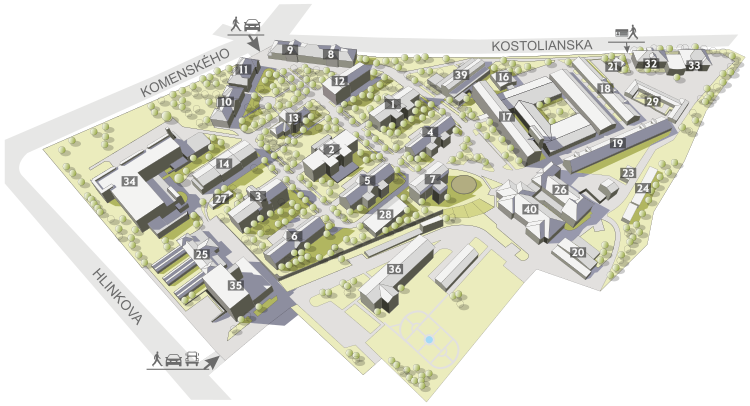
P39 Dissection room P34 Laboratory of the Department of Morphological Disciplines
Veterinary
Histomorphology
Students have at their disposal histological slides of tissues and organs from all systems, as well as slides of bird and mammalian embryos; - sufficient number of high quality microscopes (50 pcs) (Optika, ICOE, Motic); - a trinocular microscope directly connected to the screen is available for pedagogical purposes. Renovated laboratory facilities. Qualitative evaluation of samples is made possible by the use of staining methods such as haematoxylin-eosin, Giemsa-Romanowski, resorcin-fuchsin; - GraphPad Prism software is used for the quantitative evaluation of samples
Hall 17 No. 141 145 No. 146 147
Animal systems physiology
Processor Hydrasys Electrophoresis - Automatic - Gel electrophoresis Used to determine the concentration of lipoproteins (HDL, LDL, VLDL), protein fractions (albumin, alpha1, alpha2, beta1, beta2 and gamma globulins) and LDH isoenzyme activity (LDH 1,2,3,4,5) in blood serum and tissue extract.
The EPSON V70 scanner is used to evaluate electrophoretic gels.
Photometer Multiscan Ex. Microplate reader - ELISA reader Used to determine the concentration of proteins, acetylcholine, hormones (progesterone, prolactin), IGFI, IGF-BP3, in blood serum, homogenates.
Nikon Eclipse 200 trinocular microscope + ProgRes CT3 colour camera, 15 Mpix + NIS ELEMENTS software Br used for evaluation of histological preparations, blood smears (morphometry, immunohistochemistry).
P8/1
Organ pathological anatomy
Material and equipment for animal dissection and further examinations: 1. histological sledge microtomes (pfm Slide 2003 - pfm medical Germany and Histoslide 2000, Leica - Reichert - Jung), Shandon Citadel - tissue processor, watering device WD4, light microscopes with camera: MOTIC + photocamera MOTICAM 2330, NICON Eclipse Tí + photocamera), thermostat, refrigerator, 2. PCR: PCR box, PCR thermocycler, CO2 incubator, deep freeze box, 3. cytology: cytocentrifuge 4. flow cytometry: Becton Dickinson flow cytometer, centrifuge
P17/C Autopsies and laboratories of the Department of Morphology
Molecular biology and genetics
Microscope Olympus SZ 61, sterilizer FST 250, thermomixer, preparation of reagents Eppendorf Thermomixer, thermostat BT120, incubation for enzyme assays water bath, fluorescence microscope fluorescence signal detection for various methods NIKON Eclipse Ni-U, detection and electrophoretic separation of PCR products - horizontal electrophoresis, Detection instrument for PCR products Geno View UV Transilluminator, Forks sensing system in Dugimage System transilluminator, Preparation of samples and slides for FISH, Comet assay Water bath T Selecta, Thermostat, In vitro cell culture Memmert IN75, Thermocycler, Analytik Jena, PCR reactions TPersonal thermocycler Biometra, Nanodrop and spectrophotometer-DNA/RNA purity detection IMPLEN nanospectrophotometer P-class, laboratory microscope, cytogenetic analysis Nikon Eclipse E200, Thermoblock and thermo-mixer - sample heating TS-100- C Biosan, Sterile PCR box with UV light - preparation of PCR reactions DNA/RNA UV-cleaner VVC/T-AR, Software for recording and photographing fluorescence signals, LUCIA Karyo-FISH karyotyping, Centrifuge, cytogenetic sample processing Centrifuge 5702 Eppendorf, Microcentrifuge, sample processing Micro-120 Hettich, Binder model 115 laboratory glass dryer, Autoclave, Faro Easy - R pressure steriliser
Pavilion 16
Veterinary surgery and orthopaedics
Anesthesia machine Komesaroff Mini - Kom VIC, Anesthesia machine KRUUSE with 2 vaporizers on stand, Defibrillator HEART SAVE ONE with accessories, Electrocautery - electrosurgery., microsurgery, BABYTHERM baby incubator, Dixion infusion pump, Instilar, Beneview T8/T1 modular vital signs monitor, UVN isoflurane vaporizer, P-40, VAPORISOR VOC operating theatres and outpatient clinics, v.no. 106101
Electrocautery - electrosurgery, microprocessor, Dixion infusion pump, Instilar, Operating table ceiling lamp with integ. camera. system, Negatoscope viewing field LED MST - 4000 double, Stereomicroscope STEMI 508C, v.no. 3943001949 - body; Bathtub with treadmill for rehabilitation, v.no. 14/008/10-15
UVN, P-40, operating theatres and outpatient clinics
Diagnosis of animal diseases
USG Endoscope ECG Hematology analyzer, semi-quantitative methods of examination (urine, blood, rumen contents, faeces,...)
Pavilion 17
Seminar room I Seminar room I Seminar room I Seminar room I laboratory 3 Seminar room 75, laboratory 3
Veterinary obstetrics and gynaecology
Material and equipment of the clinic, ultrasound machines, X-ray, endoscopes, metabolite and hormone analyzers
P-17, P-18
Veterinary Biochemistry
PhastSystem electrophoretic separation system
Ultimate 3000/ThermoScientific liquid chromatograph with accessories
ISO-3100SD/Dionex compact isocratic system
UV-VIS spectrophotometer Cary 60 with Peltier/Agilent Technologies
Mastersizer 3000/Malvern laser particle counter
P35-411
P35-211
P-35-211,P-35-014
P-35-016
P35-211
Animal toxicology
TRACE O MAT combustion apparatus. Autoclave - pressure vessel, 60 l Autoclave STE-TAN Box laminar class II MB 120 Box UV 254 and 366 nm DESAGA Centrifuge cooled Universal 320 R CO2 incubator Transferpette S10 dosing device Transferpette S 2x Digester L 501 Digester lab.LD HPL1200+DTD ELISA washer IW 8 - 3D ELISA reader Apollo 11 Photodocumentation equipment.Quantum ST5+computer,monitor Photoluminescence microscope Deep freezer box Ultrasonic homogenizer HD2070 Horizontal blotting unit EV261 Immersion chiller with power control CO2 incubator, ICO105 med Gel chamber OmniPage Maxi Laminar box Inverted trinocular microscope IT415PH SET with camera KAPA2000 professional microscope+optical pre-set Konus microscope Routine microscope NIKON light microscope, fluorescence microscope with camera Multiprojector BENQMP 720 p Vacuum rotary evaporator INGOS RVO 400 Centrifuge K 24 PCR box UVC/T-AR pH meter OP 264 pH meter PH 539 pH meter with accessories pH meter with accessories InoLab 7110 SET Spekol ll. Spectrophotometer for ELISA Spectrophotometer Helios Gama UV/VIS Spectrophotometer Helios Gama UV/VIS Stereomicroscope with zoom SMZ Stereotaxic apparatus, digital + Micro Drill Gel dryer E6200 Light microscopes with camera: MOTIC + photocamera MOTICAM 2330, NICON Eclipse Tí + photocamera) Thermocycler telemetry kit for PCR
Thermocycler with gradient C 1000 Biological thermostat with cooling TER80 Laboratory shaker Kavalier Orbital shaker PST-60HL-4 Scale AB 204 Analytical scale 2x Digital scale AM 50 Scale PRECISA 125 A xCELLidence system real-time cell analyzer)
P36
Alternatively
models in
Research
Material and equipment for molecular analyses: thermostats, autoclaves, refrigerators, freezers, boxes for DNA and RNA work, centrifuges, thermocyclers for PCR and qPCR, electrophoretic apparatus, sonifier
Pavilion 1
Methodology and statistical evaluation of a biological experiment
Statistical software (IBM SPSS Statistics, GraphPad Prism)
P17, Department of Morphological Disciplines
Animal nutrition and dietetics
Material and equipment for the nutritional evaluation of feeds, compound feeds and rations (dry matter, NL, structural and non-structural carbohydrates, ether extract, minerals) : drying oven, Mufl oven, Kjeltec Analyzer (1030 and 2300), Det Gras Analyzer, Dosi Fiber Analyzer, Ankom, automatic polarimeter AP 300, atomic absorption spectrophotometer, - for dietetic evaluation of feeds, rations: pH meters, semi-automatic titrator ( Titroline 5000), Daisy II incubator.
Material and equipment for the evaluation of the level of carbohydrate fermentation in rumen and intestinal contents (pH, UMK - acetic acid, propionic acid, butyric acid), and in blood serum the level of ketonic substances (acetoacetic acid and β-hydroxybutyric acid): two-column isotachophoretic analyzer EA100 and EA 101.
Material and equipment for the analysis and evaluation of indicators of protein (total protein, albumin, urea), energy metabolism (triglycerides, NEMK, glucose) and metabolic load status of the liver ( AST, GGT, bilirubin): automatic biochemical analyzer "ELLIPSE", spectrophotometers in the visible and UV region.
P 12, Laboratory 3,5,6 Physics laboratory
- b) Information resources
-
All literary resources for study outlined in the syllabi are available either in print or electronic form, all information databases purchased and licensed by the university are widely available to students.
- c) Distance learning, e-learning access and procedures
-
UVLF in Košice also provides distance learning for all courses via the MOODLE and MS Teams platforms. Each student can access manuals either in electronic form or in the form of video instructions.
- d) Partners involved in educational activities
-
Partners of the university in the provision of educational activities of the study programme and characteristics of their participation.
- e) Social, sports, cultural, spiritual and community activities
-
UVLF in Košice provides excellent conditions for the above.
- f) Student mobility and placements
-
Students of the Veterinary Morphology and Physiology study programme are guaranteed the opportunity to participate in mobilities. The entire agenda containing instructions and conditions for applying for mobility, conditions and rules of participation as well as rules for recognizing mobility as part of the study plan is covered by the Vice-Rector for International Relations and Internationalisation and the organisational unit managed by her, which is the UVMP Mobility Office. The whole process requires coordination with the supervisor, and is recommended after the study part of the study plan has been completed. Participation in mobility and other contexts are regulated Article 42 of the Internal Regulations of the Study Regulations of the UVMP in Košice, Part.
9. Required skills of the applicant and prerequisites
- a) Required abilities and admission prerequisites
-
These are laid down in Article 1 and Article 2, Part B, Part II Organisation of Studies of the Internal Regulations of the Study Regulations of the UVMP in Košice.
- b) Admission procedures
-
These are laid down in Article 3 and Article 4, Part B, Part II Organisation of Studies of the Internal Regulations of the Study Regulations of the UVMP in Košice. Examination boards for admission examinations are at least 4-member and are appointed by the Rector on an ad hoc basis according to the focus of the study programmes to which students apply.
- c) Admission results over the standard duration of study
-
Academic year Applicants Admitted Enrolled Graduates 2021/2022 19 3 — — 2020/2021 — 1 — — 2019/2020 — 6 — — 2018/2019 — 4 — —
10. Feedback regarding the quality of education provided
- a) Monitoring and assessment of student feedback
-
- Procedures for monitoring and evaluating students' views on the quality of the study programme:
The students of UVMP in Košice can evaluate the quality of teaching anonymously through an anonymous questionnaire after graduation, where they evaluate the quality of a particular study programme and the quality of the lecturers who provide the course. Monitoring of study programmes is also continuously carried out by the coordinators of individual fields (5) of science and research at UVMP.
- b) Student feedback and measures to improve programme quality
-
The feedback and measures to improve the quality of the study programme are part of the Annual Reports on the Educational Activity at UVLF in Košice for individual academic years and the Annual Reports on the Quality of UVLF in Košice for individual academic years. They are also presented at the Teachers' meeting, which is held at the beginning of each academic year. In general, the principle that the results of the feedback are very important for drawing conclusions from the evaluations, as these are implemented into concrete measures aimed at improving the quality of the study programme.
- c) Graduate feedback and measures to improve programme quality
-
The results of alumni feedback and related measures to improve the quality of the study programme are part of the Annual Reports on Scientific and Research Activities at UVMP in Košice for individual AY and Annual Reports on the Quality of UVMP in Košice for individual AY. The Vice-Rector for Science, Research and Doctoral Studies and the coordinators of the individual domains of science and research act within the framework of the measures to improve the quality of the study programme by personally entering into the solution of the problems arising from the results of the feedback.
11. Demonstration of long-term and continuous success in obtaining financial support
- a) Demonstration of long-term and continuous success in obtaining financial support
-
P.no.
Project number
From
To
Project name
Provider
Principal Investigator / Co-Principal Investigator
1
011UVLF-4/2013
2013
2015
Modern information technologies in the study of anatomy
CEGA
Dávid Maženský, DVM PhD.
2
006UVLF-4/2014
2014
2016
Animal anatomy 1. (bones, joints, muscles).
CEGA
Prof. Ján Danko, DVM PhD.
3
1/0374/14
2014
2016
Effect of essential oils and minerals on intestinal physiological processes and antioxidant protection in animals
SGA
Prof. Zita Faixová, DVM PhD.
4
1/0476/16
2016
2019
Study of the application of additives high in polyunsaturated fatty acids potentiating the effect of probiotics on the modulation of metabolic and reproductive processes in animals
SGA
Assoc. Prof. Drahomíra Sopková, DVM PhD.
5
013UVLF-4/2017
2017
2019
Application of progressive imaging technologies to the educational process of anatomy to increase the effectiveness of teaching and support integration with practice
CEGA
Assoc. Prof. Lenka Krešáková, DVM PhD.
6
1/0658/17
2017
2020
A comprehensive view of the impact of additives on the animal organism
SGA
Prof. Zita Faixová, DVM PhD.
7
APVV-17-0110
2018
2021
Injectable hybrid composite biocement
RDPA
Prof. Ján Danko, DVM PhD.
8
1/0241/18
2018
2021
The chicken embryo as an effective animal model in testing the toxicological effects of snake venom
SGA
Vladimír Petrilla, DVM PhD.
9
47/2019/UVLF
2019
2021
Research on innovative forms of treatment of bone defects by linking bioactive biomaterials with autologous growth factors
Other
Prof. Ján Danko, DVM PhD.
10
004UVLF-4/2019
2019
2021
Integration of the latest imaging technologies in the study of hard tissues in veterinary medicine
CEGA
Assoc. Prof. Katarína Vdoviaková, DVM PhD.
11
009UVLF-4/2019
2019
2021
Implication of progressive educational methods in the teaching of physiology
CEGA
Assoc. Prof. Drahomíra Sopková, DVM PhD.
12
1/0050/19
2019
2022
Regeneration of articular cartilage defects using innovative biomaterials
SGA
Prof. Eva Petrovová, DVM PhD.
13
009UVLF-4/2020
2020
2022
Stratigraphy of the vascular system in an innovative form of anatomy teaching
CEGA
Assoc. Prof. Lenka Krešáková, DVM PhD.
14
PVV-20-0184
2021
2024
Composite biomaterials with complex natural additives
RDPA
Prof. Ján Danko, DVM PhD.
15
APVV-20-0073
2021
2025
Chorioallantoic membrane - an in vivo model for studying biocompatibility of materials
RDPA
Prof. Eva Petrovová, DVM PhD.
16
017UVLF-4/2022
2022
2024
Implementation of information and imaging technologies in the study of the musculoskeletal system
CEGA
Assoc. Prof. Katarína Vdoviaková, DVM PhD.
12. Links to other relevant internal regulations and information regarding the study or the student of the study programme
- Relevant internal regulations and other information
If the window remains open, close this browser tab.