

- a) Name and registration code of the study programme:
- Microbiology and Immunology · 185191 · UIPŠ 1536V00
- b) Degree of study and ISCED level:
- Third degree · ISCED 8
- c) Place of delivery:
- University of Veterinary Medicine and Pharmacy in Košice · Komenského 73, 041 81 Košice
- d) Field of study and ISCED-F code:
- Biology
- e) Type of study programme:
- Single degree study
- f) Awarded academic degree:
- PhD (philosophiae doctor)
- g) Form of study:
- full-time study
- h) Partner universities and distribution of study obligations in a joint study programme
- i) Language of instruction:
- Slovak language
- j) Standard duration of study:
- 4 years
- k) Programme capacity and applicants over the last six academic years
-
Planned student capacity Applicants over the last 6 academic years Admitted students over the last 6 academic years Enrolled students over the last 6 academic years — — — — - l) Information about the study programme:
- Programme details
Study programme description
Microbiology and Immunology
full-time study ·  · 185191 · 2026/2027
Last updated: 02.11.2026
- Higher education institution
- University of Veterinary Medicine and Pharmacy in Košice
- Registered address
- Komenského 73, 041 81 Košice
- Institution identification number
- 00397474
- Programme approval body
- UVMP Accreditation Commission in Košice
- Approval date
- 27.08.2024
1. Basic data on the study programme
2. Profile of a graduate and aims of education
- a) Educational objectives and main learning outcomes
-
The learning objectives achieved in the Microbiology and Immunology study programme are methodologically based on the European Qualifications Framework for Lifelong Learning (EQF). This defines the requirements for learning outcomes for knowledge, skills, responsibility and autonomy.
For level 8, the required learning outcomes are 'knowledge at the highest level in the field of work or field of study as well as at the interface between fields/fields'.
The carriers of the graduate's core knowledge are profile subjects in the field of bacteriology, virology, general immunology, clinical microbiology and molecular biology which are described in the information sheets as knowledge achieved as learning outcomes. Additional knowledge are achieved by completing compulsory elective courses of the study programme in the field of food microbiology, infectious diseases of animals, basic genetic engineering, pathological reactions of the immune system and pathological psysiology.
The graduate gets extensive professional knowledge in several areas of the study programme or field, which is used as a basis for research and development in microbiology. It focuses on acquiring the latest theoretical knowledge based on the current state of scientific knowledge in individual areas of microbiology and immunology.
Its study builds up on the knowledge acquired through second-level studies at veterinary and medical faculties (universities), as well as at pharmaceutical, natural sciences, and other faculties of medicine and natural sciences. On this basis, the principles of education in level 3 are based on the acquisition of knowledge in theoretical, applied and clinical microbiology, which includes: viruses, bacteria and microscopic fungi. Particular attention is paid to the study of the variability of viruses, bacteria, microscopic fungi, specifically their physiological and pathological role in the human and animal organism, but also in terms of horizontal transfer of genetic information (conjugation, transformation and transduction), resistance to antimicrobial agents and survival in the ecosystem, immune responses at the molecular level in in vitro (cell cultures) and in vivo conditions (animal models) with a focus on gene expression (qRT-PCR, RNA-seq), as well as on the detection of molecules - CD signs, antibodies, cytokines (by flow cytometry, immunoenzymatic or immunofluorescence methods) involved in the formation and regulation of the immune response. It focuses on obtaining the latest theoretical and practical knowledge in the study of the causative agents of new and re-emerging infections of viral and bacterial origin, as well as in the study of health-beneficial bacteria, respectively. their communities, including the response of the host authority.
For level 8, the most 'advanced and specialised skills and techniques, including the ability to synthesise and evaluate, are required to solve fundamental problems in research and/or innovation and to extend and redefine existing knowledge or professional practices'.
A graduate of the Microbiology and Immunology study programme is qualified to exercise the profession of a microbiology expert. He/she is proficient in scientific research methods in the field of experimental and clinical microbiology, which he/she creatively implements on various model objects (cell cultures and laboratory animals). Can use statistical and bioinformatics methods as well as other knowledge from related disciplines.
He/She can investigates the properties of microorganisms (morphological, cultural, metabolic, biochemical, molecular-biological and others), as well as at different levels of their interrelationships with the host (commensal, mutualist, facultative pathogen and pathogen), using progressive methodological approaches in order to gain new, previously unpublished knowledge. He is technically proficient not only in routine laboratory procedures, but also in working with the software-intensive instrumentation of the bacteriology, mycology, virology and immunology laboratory. He/she is able to formulate scientific problems, conduct creative and independent research and independently present the results of his/her work in internationally accepted journals or present them at scientific events. The results of creative experimental work contribute not only to the development of science and scientific knowledge, but their appropriate scientific value allows their application in human and veterinary medicine, agriculture, pharmacology and the protection of the gene pools of animals and man himself.
Responsibility and autonomy, defined for Level 8, is "the ability to display considerable authority, innovation, independence, scholarly and professional integrity, and a sustained commitment to the development of new ideas or practices that are at the forefront of a given work or learning environment, including research."
The graduate is characterized by independent, critical and analytical thinking. He/she takes into account social, scientific and ethical aspects when formulating research intentions and interpreting research results. The results of his/her own creative work contribute to the development of science, scientific knowledge and the application of acquired knowledge to practice. He/she will present the results of research and development independently to the professional community. Is able to determine the focus of research and coordinate a team in the relevant study programme. On the basis of his/her outputs and findings, he/she is able to independently propose, verify
and implement new research and working practices.- The graduate of the Microbiology and Immunology study programme can apply as a microbiologist – an expert in basic and applied research of a microbiological focus in the department of health, agriculture, the environment, the Ministry of Defense and the Ministry of the Interior or as an immunologist – an expert in basic and applied research of an immunological focus in the department healthcare, agriculture and the environment.
- b) Occupations and graduate employment opportunities
- Not provided yet.
- c) Statements of relevant external stakeholders
-
Relevant external stakeholders who have provided a statement or a favourable opinion on the compliance of the acquired qualification with the sector-specific requirements of the profession: Institute of Livestock Physiology, Center of Biosciences, Slovak Academy of Sciences - https://qa.uvlf.sk/vsk/ docs/vzs_mikro_sav.pdf and Institute of Neuroimmunology of the Slovak Academy of Sciences, v.v.i. - https://qa.uvlf.sk/vsk/docs/vzs_immuno_niu.pdf
3. Job prospects
- a) Assessment of graduate employability
-
Based on previous long-term experience with graduates of the Microbiology and Immunology study program, could be concluded that graduates find employment at all universities where microbiology and immunology are taught as part of the biological disciplines, and at research institutes where theoretical and practical aspects of microbial processes and reactions of the immune system, through their genetic determination, their various manifestations up to the impact on the organism, especially in the issue of infectious diseases, primarily of bacterial and viral origin, as well as hypersensitivity and autoimmune diseases. It will find application in the Department of Health, Agriculture, the Environment, the Ministry of Defense and the Ministry of the Interior, especially in laboratories dealing with the analysis of physiological as well as pathological immune response, microorganisms as inhabitants of the ecosystem, as infectious agents, as agents of zoonoses, epizootics and part of the biological threat, but also as organisms used in the food, feed and pharmaceutical industries and in wastewater treatment.
- b) Examples of successful graduates
- Not provided yet.
- c) Employer feedback on programme quality
-
Employers' evaluation of the quality of the study programme (feedback): UVMP has prepared questionnaires about graduates for employers.
4. Structure and content of the study programme
- a) Rules for designing study plans
-
- The rules for the formation of study plans in the Microbiology and Immunology study programme are based on the general provisions contained in Article 8 of the internal regulation Study Regulations of the UVMP in Košice, Part B.
- The recommended framework curriculum for doctoral students for full-time (daily) study is given in Table 1:
Table 1 Framework study plan for full-time PhD students in the study programme Microbiology and Immunology
Year
Study
Study part
Teaching Termination
Number of credits
Scientific part
Number of credits
End
1.
Bacteriology
Virology
General Immunology
Compulsory elective course 1
Compulsory elective course 2
Foreign Language - Course
E
E
E
E
E
C
10
10
10
5
5
Dissertation methodology
20
Total number of credits: 60
40
20
2.
Clinical Immunology
Molecular Biology
Foreign Language
Pedagogical activity
E
E
E
10
10
5
5
Experimental work Dissertation exam
10
20
SE
Total number of credits: 60
30
30
3.
Pedagogical activity
5
Experimental work
Publication activity
30
25
Total number of credits: 60
5
55
4.
Pedagogical activity
5
Publication activity Defended dissertation thesis
25
30
SE
Total number of credits: 60
5
55
Total number of credits: 240
80
160
Explanatory notes: E - examination, SE - state examination, C - credit
Compulsory elective subjects (the doctoral student chooses a total of 2 compulsory elective subjects based on the focus of the dissertation) from the following subjects:
- Food Microbiology
- Infectious Diseases of Animals
- Basics of Genetic Engineering
- Pathological Reactions of Immune System
- Pathological Physiology
The condition for granting consent to the student's dissertation examination is:
- obtaining at least 85 credits from the academic and scientific part of the study plan,
- completion of all prescribed profile and compulsory optional subjects listed in the doctoral student's individual study plan,
- taking a language test,
- preparation of a written work (dissertation project), which also includes the theses of the dissertation, in the range of at least 40 and at maximally 50 pages.
A full-time doctoral student must register for the dissertation exam within 18 months at the latest. A minimum of 240 credits is required to graduate.
- In the study plan:
- individual parts of the study program are listed (compulsory and compulsory optional subjects in the structure),
- for each educational part (subject), the educational outcomes and related criteria and rules for their evaluation are defined in the information sheet of the subject so that all the educational goals of the study program are met,
- for each educational part of the study plan (subject), the educational activities suitable for achieving educational outcomes are specified in the information sheet of the subject,
- the subject information sheet lists the methods by which the educational activity is carried out,
- the course syllabus is listed in the subject information sheet,
- the student's workload is stated in the subject information sheet,
- credits are assigned to each part based on the educational outcomes achieved and the related workload,
- the guarantor of the subject is specified and in the information sheets of the subjects, possibly also other persons securing the subjects,
- the place where the subject is carried out is indicated (if the study program is carried out at several workplaces).
Information sheets for the subjects of the microbiology and immunology study program are available through the lines directly in the study plan
Information sheets for the subjects of the Microbiology and Immunology study program are available through the lines directly in the study plan.
- The number of credits, the achievement of which is a condition for the proper completion of studies and other conditions that must be fulfilled by the student in the course of study of the study programme and for its proper completion, including the conditions of state examinations, the rules for repeating studies and the rules for extending, interrupting studies:
The condition for the proper completion of studies is the acquisition of 240 credits, which include credits for passing the dissertation examination and defending the dissertation. Other conditions that the student must fulfil during the study programme and for its proper completion, including the conditions of state examinations, rules for repeating the study and rules for extension, interruption of the study are specified in Articles 2, 15, 18, 19 and 29 of the internal regulation Study Regulations of UVMP in Košice, Part B.
- The conditions for completing the individual parts of the study programme and the student' s progress in the study programme in the structure:
- number of credits for profile (compulsory) subjects required for the proper completion of studies/completion of part of studies: 50
- number of credits for compulsory elective courses required for the proper completion of studies/completion of part of studies: 10
- number of credits for the dissertation examination: 20
- number of credits for the defence of the final thesis required for proper completion of studies: 30
- Rules for the verification of learning outcomes and the assessment of students and the possibility of corrective procedures against this assessment:
- b) Recommended study plan:
- Study plan 2026/2027
- c) Information included in the study plan
-
Course information sheets for the Microbiology and Immunology study programme are available through links directly in the study plan.
- d) Credits and other requirements for completion of study
- Not provided yet.
- e) Requirements for individual programme components and student progression
- Not provided yet.
- f) Assessment of learning outcomes and appeal procedures
- Not provided yet.
- g) Recognition of studies or parts of studies
- Not provided yet.
- h) Thesis topics
-
Thesis topics and supervisors are listed in Table 2 in section 7.e of this description.
- i) Other study rules and procedures
-
UVMP in Košice has described the rules for the verification of learning outcomes and evaluation of students and the possibilities of corrective procedures against this evaluation in Articles 17, 18 and 25 of the internal regulation Study Regulations of UVMP in Košice, Part B.
- Conditions for the recognition of studies or part of studies:
UVMP in Košice has regulated the conditions for recognition of studies or part of studies in Articles 19, 38 and 42 of the internal regulation Study Regulations of UVMP in Košice, Part B.
- Topics of the final theses of the study programme:
UVLF in Košice publishes the list of thesis topics of the study programme Microbiology and Immunology in a tabular overview as well as on the UVLF in Košice website.
.
- UVMP in Košice has described:
- the rules for assigning, processing, opposing, defending and evaluating final theses in Articles 1, 8, 9, 10, 25, 26, 27 and 28 of the internal regulation Study Regulations of UVMP in Košice, Part B,
- possibilities and procedures for participation in student mobility in Article 42 of the internal regulation Study Regulations of UVMP in Košice, Part B,
- rules of observing academic ethics and drawing consequences in the internal regulation Disciplinary Regulations for Students of the University of Veterinary Medicine and Pharmacy in Košice, in the internal regulation Code of Ethics of UVMP Employees and in the internal regulation Code of Ethics of UVMP Students,
- procedures applicable to students with special needs in Part II, Article 2, point 7; Article 3, point 12 of the internal regulation Study Regulations of UVMP in Košice, Part B,
- the procedures for filing complaints and appeals by the student are specified, in addition to the Study Regulations of UVMP in Košice, in particular in the internal regulation Directive on the handling of complaints at UVMP in Košice.
5. Study programme’s information letters
- Course information sheets
-
Course information sheets are available through links directly in the study plan. Study plan 2026/2027
6. Current schedule of the academic year and current timetables
- Current academic calendar and timetables
- Not provided yet.
7. Staff
- a) Person responsible for the delivery, development and quality of the study programme
- Prof. Tkáčiková Ľudmila, DVM, PhD
- b) Teachers of profile courses
- c) Research/art/teaching profiles of teachers of profile courses
- d) Teachers, courses and links to the central register of university employees
-
(Click the teacher’s name to open their profile and contact details, where available.)
- e) Thesis supervisors and topics 4 years
-
(Click the teacher’s name to open their profile and contact details, where available.)
Table 2 – Thesis supervisors and topics Teacher Thesis topics Academic year Tomáš Smolek, DVM, M.Sc., PhD Mitochondrial dysfunction in tau neurodegeneration 2024/2025 Dominika Fričová, M.D., M.A., PhD The interconnection of senescence and misfolded proteins related pathologies in neurodegeneration 2024/2025 - f) Research/art/teaching profiles of thesis supervisors
-
The supervisors’ research/art/teaching profiles are available through their personal profiles using the name buttons in the preceding table.
- g) Student representatives and contacts
-
The member of the committee for the preparation of the study programme Microbiology was a student of the study programme General Veterinary Medicine veterinary medicine MVDr. Maroš Kostičák, e-mail: maros.kosticak@student.uvlf.sk; MVDr. Michaela Kaduková, e-mail: michaela.kadukova@student.uvlf.sk
- h) Study adviser
-
Study programme advisor: vice-rector for research and doctoral studies at UVMP in Košice
- Other study programme support staff - assigned study officer: Mgr. Júlia Jančura, e-mail julia.jancura@uvlf.sk; career counsellor: the function of the career counsellor is performed by the doctoral student's supervisor.
- i) Other support staff
- Not provided yet.
8. Premises, tools and technical equipment
- a) Teaching premises and their technical equipment
-
Subject
Characteristics of material and technical equipment
Location Bacteriology
Material and equipment for bacteriological and virological diagnostics and molecular biology: Thermostats, autoclaves, refrigerators, BSL2 laminar boxes, PCR boxes, conventional and refrigerated benchtop centrifuges, benchtop ultracentrifuge, thermocyclers for PCR and qPCR, Synergy 2 multidetection equipment, light inverted microscopes, Axio Observer fluorescence microscope (Zeiss) extended with Apotome 3 (Zeiss), technical extension of the Axio Observer microscope for "live cell imaging", CO2 incubator, electrophoretic apparatus, deep freezing boxes, isolates for gnotobiotic animals
P3
Deapartment of Microbiology and Immunology;
Workplace Pri hati 10
Laboratory of Gnotobiology
Virology
Material and equipment for bacteriological and virological diagnostics and molecular biology: Thermostats, autoclaves, refrigerators, BSL2 laminar boxes, PCR boxes, conventional and refrigerated benchtop centrifuges, benchtop ultracentrifuge, thermocyclers for PCR and qPCR, Synergy 2 multidetection equipment, light inverted microscopes, Axio Observer fluorescence microscope (Zeiss) extended with Apotome 3 (Zeiss), technical extension of the Axio Observer microscope for "live cell imaging", CO2 incubator, electrophoretic apparatus, deep freezing boxes, isolates for gnotobiotic animals
P3
Deapartment of Microbiology and Immunology;
Workplace Pri hati 10
Laboratory of Gnotobiology
Molecular Biology
Materials and equipment for molecular genetic laboratory diagnostics and molecular biology: deep freezers, refrigerators, freezers, BSL2 laminar boxes, PCR boxes, refrigerated centrifuges, robotic nucleic acid isolator, PCR thermocyclers, real-time PCR thermocyclers, digital droplet PCR, electrophoretic apparatus, automated imaging and documentation system, automated chip electrophoresis, micro-volume spectrophotometer, microcentrifuges, vortexes, thermoblocks, bioinformatics software, BSL 3 Laboratory
P36
Laboratory of Biomedical Microbiology and Immunology;
P1
Department of Epizootiology, Parasitology and Protection of One Health
General immunology
Material and equipment for bacteriological and virological diagnostics and molecular biology: Thermostats, autoclaves, refrigerators, BSL2 laminar boxes, PCR boxes, conventional and refrigerated benchtop centrifuges, benchtop ultracentrifuge, thermocyclers for PCR and qPCR, Synergy 2 multidetection equipment, light inverted microscopes, Axio Observer fluorescence microscope (Zeiss) extended with Apotome 3 (Zeiss), technical extension of the Axio Observer microscope for "live cell imaging", CO2 incubator, electrophoretic apparatus, deep freezing boxes, isolates for gnotobiotic animals
P3
Deapartment of Microbiology and Immunology;
Workplace Pri hati 10
Laboratory of Gnotobiology
Clinical Immunology
Material and equipment for bacteriological diagnostics and molecular biology: thermostats, autoclaves, refrigerators, BSL2 laminar boxes, PCR box, centrifuges and ultracentrifuge, thermocyclers for PCR and qPCR, Synergy 2 spectrophotometer with culture device, fluorescence microscope with apotome and culture device , CO2 incubator, electrophoretic equipment, deep-freezing boxes, flow cytometer, isolators for gnotobiological animals, experimental room for lab animals
P3
Deapartment of Microbiology and Immunology;
Workplace Pri hati 10
Laboratory of Gnotobiology
Food Microbiology
Material and equipment for bacteriological, mycological and molecular diagnostics: Thermostats, autoclaves, hot air sterilizer, refrigerators, freezers, deep freezers, BSL2 laminar boxes, PCR box, centrifuges, ultracentrifuges, gradient thermocycler for PCR, electrophoretic apparatus, photo-documentation equipment for visualization and photo-documentation of agarose gels, micro-volume spectrophotometer for DNA quantification. Spectrophotometers, pH meters, ultrasonic bath, ELISA reader, optical microscopes, digital microscopes, thin layer chromatography chamber
P6
Microbiology and Mycology
Laboratory at the
Department of Food Hygiene, Technology and Safety,
Door No. 21 and 47
Infectious Diseases of Animals
Material and equipment for teaching epizootology; training rooms and laboratories are organized and equipped specifically for the detection and study of pathogens - the causative agents of infectious diseases (viral, bacterial and fungal), including conducting epizootological studies aimed at analysis, assessment, modeling and forecasting in epizootology: laminar BSL2 boxes, PCR boxes, robotic nucleic acid isolator, centrifuges and ultracentrifuges, thermocyclers for PCR, real-time PCR, digital droplet PCR, multi-mode reader Synergy HTX, ELISA reader, electrophoretic equipment, automated imaging and documentation system, automated chip electrophoresis, deep-freezing boxes, fluorescence microscope, thermostats, CO2 incubators, autoclaves, refrigerators and more
P1
Department of Epizootiology, Parasitology and Protection of One Health
Basics of Genetic Engineering
Material and equipment for molecular analyses: thermostats, autoclaves, refrigerators, freezers, boxes for DNA and RNA work, centrifuges, thermocyclers for PCR and qPCR, electrophoretic apparatus, sonifier
P1
Department of Epizootiology, Parasitology and Protection of One Health
Pathological Reactions of Immune System
Material and equipment for clinical diagnosis of diseases caused by pathological immune reactions, Microscope, IDEXX hematology analyzer, Pro Cyte DX, IDEXX biochemical analyzer, catalyst One, USG device ALOKA
P26
Small Animal Clinics
Pathological Physiology
ELISA reader (Apollo LB 913, Germany), spectrophotometer (Thermo Electron Corporation, Made in USA), spectrophotometer (VWR International bvba, Made in China), FRAS (FRAS BRAVO, H&H Parma Italy, light microscopes (Carl Zeiss Microscopy, Made in Germany), thermostat (Memmert, made in Germany), freezer (Liebherr – MEDLine, made in Austria), refrigerators (Gorenje, Made in Slovenia), centrifuge (Eppendorf, Made in Germany)
P8
Department of Biology and Physiology
- Characteristics of information provision of the study programme (access to study literature according to course information sheets), access to information databases
and other information resources, information technology, etc.):
All literary resources for study listed in the fact sheets are available in either print or electronic form, and all information databases purchased and licensed by the University are accessible to students.
- Characteristics and scope of distance learning applied in the curriculum with assignment to courses. Approaches, manuals of e-learning portals. Procedures for transition from full-time to distance learning.
UVMP in Košice has also distance learning for all subjects, which is currently provided through MOODLE and MS Teams platforms. Each student has manuals available either in electronic form or in the form of a video tutorial.
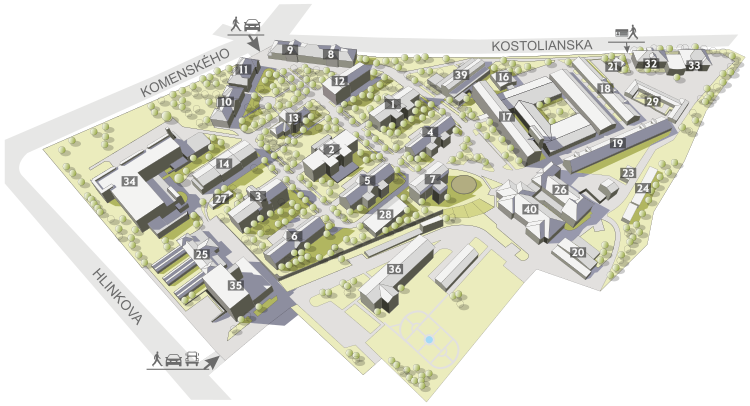
- Characteristics of information provision of the study programme (access to study literature according to course information sheets), access to information databases
- b) Information resources
- Not provided yet.
- c) Distance learning, e-learning access and procedures
- Not provided yet.
- d) Partners involved in educational activities
-
Partners of the university in ensuring the educational activities of the study program and characteristics of their participation: SAS (Slovak Academy of Sciences) and SVFA SR (The State Veterinary and Food Administration of the Slovak Republic).
- Characteristics on social, sporting, cultural, spiritual and social opportunities:
UVMP in Košice provides students with the maximum possible conditions for their enjoyment in the above areas.
- e) Social, sports, cultural, spiritual and community activities
- Not provided yet.
- f) Student mobility and placements
-
Opportunities and conditions for students to participate in mobility and internships
(with contact details), application guidelines, rules for recognition of this learning: Students of the Microbiology and Immunology study programme is guaranteed the opportunity to participate in mobility. The whole agenda containing the guidelines and conditions for applying for mobility, the conditions and rules of participation as well as the rules of recognition of participation in mobility as part of the study plan is covered by Vice-Rector for Education MVDr. Martin Tomko, PhD. (+421 918 413 553; martin.tomko@uvlf.sk) and the organisational unit managed by him, which is the UVMP Mobility Office (Segurado Benito Mario; +421 917 171 108; mario.segurado@uvlf.sk). The whole process requires coordination with the supervisor and is recommended after the study part of the study plan has been completed. Participation in mobility and other contexts are regulated in Article 42 of the Internal Regulations of the Study Regulations of UVMP in Košice, Part B.
9. Required skills of the applicant and prerequisites
- a) Required abilities and admission prerequisites
-
They are laid down in Article 1 and Article 2, Part B, Part II Organisation of Studies of the Internal Regulations of the Study Regulations of UVMP in Košice.
- b) Admission procedures
-
They are laid down in Article 3 and Article 4, Part B, Part II Organisation of Studies of the Internal Regulations of the Study Regulations of UVMP in Košice. Examination boards for admission examinations are at least 4-member and are appointed by the Rector on an ad hoc basis according to the focus of the study programmes to which students apply.
- c) Admission results over the standard duration of study
-
Academic year Applicants Admitted Enrolled Graduates —
10. Feedback regarding the quality of education provided
- a) Monitoring and assessment of student feedback
-
- Procedures for monitoring and evaluating students' views on the quality of the study programme:
Students of UVMP in Košice have the possibility of anonymous evaluation of the quality of teaching by an anonymous questionnaire after graduation, where they evaluate the quality of a particular study programme and the quality of the instructors who provide the course. Monitoring of study programmes is also continuously carried out by the coordinators of individual domains of science and research at UVMP, while 5 domains of science and research are established at UVMP.
- b) Student feedback and measures to improve programme quality
-
The principle applies that the results of the feedback are very important for receiving conclusions from the evaluations, which are implemented into concrete measures implemented with the aim of improving the quality of the study program. The results of student feedback and related measures to improve the quality of the study program are a part of the Annual Quality Reports. Feedback is also evaluated by the Quality Council, which subsequently recommends solutions to improve the quality of the respective study program. Likewise, feedback from students is dealt with by the relevant Commission for the creation, adjustment and periodic evaluation of study programs of the third degree.
- c) Graduate feedback and measures to improve programme quality
-
The results of alumni feedback and related measures to improve the quality of the study program are a part of the Annual Reports on the activities of the UVLF in Košice and the Annual Reports on the quality of the UVLF in Košice for individual academic years. As part of improving the quality of the study program, the results of the evaluations of graduates are discussed once a year at the relevant committee for the creation, adjustment and periodic evaluation of study programs, where individual comments and proposals for improving the quality of the study program are discussed. From the academic year 2022/2023, UVMP evaluates the readiness of graduates in the form of an electronic questionnaire for employers, which is available at https://forms.gle/z1h9u3rd2g9H589P7.
11. Demonstration of long-term and continuous success in obtaining financial support
- a) Demonstration of long-term and continuous success in obtaining financial support
-
P.č.
Číslo projektu
Od
Do
Názov projektu
Poskytovateľ
Riešiteľ/Spoluriešiteľ
1
1/0435/11
2011
2014
Modulation of intestinal biochemistry, intestinal microflora and immune response in pigs using probiotic microorganisms and flaxseed
VEGA
MVDr. Soňa Gancarčíková, PhD.
2
1/0855/12
2012
2014
Immunomodulating and cytotoxic effect of pesticides in conditions of viral infection
VEGA
prof. MVDr. Juraj Pistl, PhD.
3
1/0009/15
2015
2018
The use of gnotobiotic laboratory animals in the study of the physiology of the digestive tract and mutual interactions of natural microflora and pathogens of the digestive tract
VEGA
MVDr. Soňa Gancarčíková, PhD.
4
APVV-16-0176
2017
2021
Targeted modulation of intestinal microbiota and its transplantation in the prevention and therapy of intestinal inflammatory diseases
APVV
MVDr. Soňa Gancarčíková, PhD.
5
APVV-16-0171
2017
2022
Progressive methods preventing the emergence and spread of bacterial resistance to clinically relevant antibiotics
APVV
doc. MVDr. Jana Koščová, PhD.
6
1/0788/19
2019
2022
Study of changes in the microflora of dental biofilms in humans and dogs in order to harmonize the microbiocenosis of the oral cavity using selected oral probiotics
VEGA
MVDr. Marián Maďar, PhD.
7
APVV-20-0114
2021
2025
Sex-specific microbiome and gene interactions in the pathogenesis of behavioral and gastrointestinal symptoms in an animal model of autism spectrum disorders
APVV
MVDr. Soňa Gancarčíková, PhD.
8
1/0015/21
2021
2024
Gnotobiotic laboratory animals associated with human microbiota in the study of prevention and therapy of inflammatory bowel diseases (IBD)
VEGA
MVDr. Soňa Gancarčíková, PhD.
9
1/0354/21
2021
2024
Study of replication, neurovirulence potential and innate antiviral response to tick-borne orbivirus in host cell models
VEGA
doc. MVDr. Tomáš Csank, PhD.
10
1/0731/21
2021
2024
Substances of natural origin as part of sustainable aquaculture
VEGA
doc. MVDr. Jana Koščová, PhD.
11
007UVLF-4/2021
2021
2023
Bioinformatics and molecular biology tools in the study of pathogenicity and virulence factors of medically important bacterial pathogens
KEGA
prof. MVDr. Emil Pilipčinec, PhD.
P.č.
Číslo projektu
Od
Do
Názov projektu
Poskytovateľ
Riešiteľ/Spoluriešiteľ
1
APVV0701-11
2011
2014
Studying host-pathogen interactions to elucidate neuroinvasive mechanisms at the proteomic level
APVV
prof. MVSc. Mangesh Ramesh Bhide, PhD.
2
1/0054/12
2012
2014
Study of basic protein interactions involved in the translocation of Borrelia and Francisella across the blood-brain barrier
VEGA
prof. MVSc. Mangesh Ramesh Bhide, PhD.
3
1/0313/12
2012
2014
Bacterial infection of the intestines in chickens and the influence of cytokine levels by the application of probiotics
VEGA
prof. MVDr. Mikuláš Levkut, PhD.
4
1/0834/12
2012
2014
Study of the immunomodulating effect of exopolysaccharides of probiotic lactobacilli in pigs
VEGA
doc. MVDr. Ľudmila Tkáčiková, PhD.
5
APVV-0302-11
2012
2015
Probiotic microorganisms and regulation of cytokine response in the prevention of immunopathological changes during intestinal bacterial infections in poultry
APVV
prof. MVDr. Mikuláš Levkut, PhD.
6
016UVLF-4/2015
2015
2017
Advanced bioinformatics methods for veterinary and medical students
KEGA
prof. MVSc. Mangesh Ramesh Bhide, PhD.
7
/0258/15
2015
2018
Uncovering potential factors of neuroinvasive Borrelia causing neuroinflammation in the CNS
VEGA
prof. MVSc. Mangesh Ramesh Bhide, PhD.
8
1/0358/16
2016
2018
Modulation of intestinal microbiocenosis and immune response of honey bees using probiotic lactobacilli in a new application form
VEGA
prof. MVDr. Dagmar Mudroňová, PhD.
9
1/0633/17
2017
2019
Lactobacillus reuteri exopolysaccharides: study of their immunomodulatory effect on porcine intestinal epithelial cells (IPEC-1) after challenge with enterotoxigenic E. coli
VEGA
doc. MVDr. Ľudmila Tkáčiková, PhD.
10
1/0439/18
2018
2021
Analysis of the effect of the surface antigen (domain III protein E) of selected flaviviruses on cells of the neurovascular unit and synthesis of an inhibitory peptide against domain III as a potential therapeutic agent
VEGA
RNDr. Katarína Bhide, PhD.
11
APVV-18-0302
2019
2022
Development of new approaches to the therapy of tauopathies using transport peptides for drugs and antibodies to the brain
APVV
prof. MVSc. Mangesh Ramesh Bhide, PhD.
12
APVV-18-0259
2019
2023
Strategic development of therapeutic agents against neuroinfections caused by selected vector-borne pathogens
APVV
prof. MVSc. Mangesh Ramesh Bhide, PhD.
13
1/0105/19
2019
2022
Study of the effect of Borrelia surface ligands on host cells through transcriptome analysis and production of nanoantibodies against selected ligands with potential therapeutic effect
VEGA
prof. MVSc. Mangesh Ramesh Bhide, PhD.
14
1/0505/19
2019
2021
The effect of the application of autochthonous bee probiotic lactobacilli on a pollen carrier on the immune status and product quality of honey bees
VEGA
prof. MVDr. Dagmar Mudroňová, PhD.
15
PP-COVID-20-0044
2020
2021
Development of therapeutic biomolecules blocking SARS-CoV-2 infection
APVV
doc. MVSc. Mangesh Ramesh Bhide, PhD.
16
APVV-19-234
2020
2024
Development of a probiotic preparation based on autochthonous lactobacilli for salmonid fish intended to improve fish health and produce high-quality food
APVV
prof. MVDr. Dagmar Mudroňová, PhD.
17
1/0454/22
2022
2025
Study of the possibilities of using humic substances in combination with autochthonous probiotic bee lactobacilli to improve the health of honey bees and the quality of bee products
VEGA
prof. MVDr. Dagmar Mudroňová, PhD.
12. Links to other relevant internal regulations and information regarding the study or the student of the study programme
- Relevant internal regulations and other information
If the window remains open, close this browser tab.