

- a) Name and registration code of the study programme:
- Veterinary obstetrics and gynaecology · 103993 · UIPŠ 4305V00
- b) Degree of study and ISCED level:
- Third degree · ISCED 8
- c) Place of delivery:
- University of Veterinary Medicine and Pharmacy in Košice · Komenského 73, 041 81 Košice
- d) Field of study and ISCED-F code:
- Veterinary Medicine
- e) Type of study programme:
- Single degree study
- f) Awarded academic degree:
- PhD (philosophiae doctor)
- g) Form of study:
- full-time study
- h) Partner universities and distribution of study obligations in a joint study programme
- i) Language of instruction:
- English language
- j) Standard duration of study:
- 4 years
- k) Programme capacity and applicants over the last six academic years
-
Planned student capacity Applicants over the last 6 academic years Admitted students over the last 6 academic years Enrolled students over the last 6 academic years — 0 — — - l) Information about the study programme:
- Programme details
Study programme description
Veterinary obstetrics and gynaecology
full-time study ·  · 103993 · 2026/2027
Last updated: 30.10.2026
- Higher education institution
- University of Veterinary Medicine and Pharmacy in Košice
- Registered address
- Komenského 73, 041 81 Košice
- Institution identification number
- 00397474
- Programme approval body
- UVMP Accreditation Commission in Košice
- Approval date
- 26.08.2025
1. Basic data on the study programme
2. Profile of a graduate and aims of education
- a) Educational objectives and main learning outcomes
-
The learning objectives of the Veterinary Obstetrics and Gynaecology study programme are methodologically based on the European Qualifications Framework for Lifelong Learning (EQF). This defines the requirements for learning outcomes for knowledge, skills and competences. For level 8, the learning outcomes required are broad knowledge in a given field of work or field of study, including a critical understanding of theories and principles of expertise and methodological knowledge in several areas of the discipline or practice, serving as a basis for innovations in practice, research or artistic areas necessary for designing research and development or developing an area of professional practice. The focus of the courses, the core knowledge and the required skills are described in detail in the syllabi of the compulsory courses. Additional knowledge is achieved by completing other compulsory courses of the study programme. The study programme includes veterinary obstetrics, gynaecology, andrology and artificial insemination under physiological and pathological conditions, and differs from the disciplines of veterinary morphology and physiology, internal animal diseases, toxicology and environmental factors, veterinary surgery, orthopaedics and radiology, animal nutrition and dietetics, particular attention is being paid to the pathology of the reproductive cycle and childbirth, puerperium, obstetric surgery and biotechnical methods of managing the reproductive process (induction of estrus and ovulation, superovulation, gamete retrieval for in vitro technologies, embryo transfer, creation of transgenic animals, diagnosis of pregnancy, induction of labour, active puerperium management) and diagnostic therapeutic and preventive procedures for reproductive disorders in livestock, domestic animals and wildlife.
Responsibility and autonomy defined for Level 8 is "are the ability to display considerable authority, innovation, independence, scientific and professional integrity and a sustained commitment to developing new ideas or practices that are at the forefront of a given work or learning environment, including research."
The graduate is characterized by independent, critical and analytical thinking. Considers social, scientific and ethical aspects in formulating research intentions
and interpretation of research results. The graduate takes into account social, scientific and ethical aspects when formulating research intentions and interpreting research results. The results of his/her own creative work contribute to the development of science, scientific knowledge and the application of acquired knowledge in practice. The graduate presents the results of research and development independently to the professional community, can determine the focus of research and coordinate a team in scientific investigation, independently design, validate and implement new research and working practices based on own outputs and findings.- Graduates of the study programme of Veterinary obstetrics and gynaecology will become familiar with the theoretical and practical foundations of the scientific approach to solving a wide range of problems arising from organisational and behavioural deficiencies, inappropriate nutrition, exposure to toxic environment and toxic substances in the environment, which are manifested by hormonal changes during the onset of puberty, gestation, childbirth and puerperium. By completing this study programme, the graduate will master the basic principles and methods of scientific work in reproduction, the assessment of the correct research objective, the scientific principles of interpretation of results (mathematical models, statistical evaluations), the implementation of the obtained results in clinical and breeding practice by proposing new preventive and therapeutic, methods used by the Chamber of Veterinary Surgeons at the level of the veterinary district, veterinary dispensaries, outpatient clinics, hospitals, as well as by the broader breeding practice. The skills achieved by the learning outcomes corresponding to Level 8 includes broad skills demonstrating the mastery and sense of innovation required to solve complex and unpredictable problems in a specialised area of study. The Veterinary Obstetrics and Gynaecology addresses the impact of negative factors acting on the reproductive performance of livestock, domestic animals and wildlife at different levels of knowledge - molecular, cellular, organ and functional. The graduate will be introduced to experimental and scientific approaches in the hormonal control of the relationships between nutrition, environment and the biological organism at different levels in both sexes (female and male). The broadly defined competences for level 8 of the EQF are - the ability to manage complex technical or professional activities or projects, to take responsibility for decision making in unpredictable situations, to accept responsibility for managing the professional development of individuals and groups. The specific competences depend on the graduate's employment status. A graduate of the study programme in Veterinary Obstetrics and Gynaecology can work as a university teacher, scientific researcher, clinical specialist and expert in the field of consultancy for the Chamber of Veterinary Surgeons (veterinary clinics and hospitals), breeders' organisations, breeders' associations of individual species of livestock, domestic animals, and hunting special-purpose establishments as well as hunting grounds.
- b) Occupations and graduate employment opportunities
- Not provided yet.
- c) Statements of relevant external stakeholders
-
Company or external stakeholder Statement Komora veterinárnych lekárov Slovenskej republiky View
3. Job prospects
- a) Assessment of graduate employability
-
- Graduates of the study programme Veterinary Obstetrics and Gynaecology can work as university teachers, scientific researchers, clinical specialists and experts in the field of consulting for the Chamber of Veterinary Surgeons (veterinary clinics and hospitals), breeding organisations, breeders' associations of individual species of farm and domestic animals and hunting special purpose facilities and hunting grounds.
- b) Examples of successful graduates
-
Examples of successful graduates of the study programme Veterinary Obstetrics and Gynaecology are: As of the 2007/2008 academic year, there have been no successful graduates in this degree programme in the full-time form to date.
- c) Employer feedback on programme quality
-
Employers' evaluation of the quality of the study programme (feedback): the quality of the study programme can be positively evaluated indirectly on the basis of the interest among graduates of the second level of higher education from various fields (medical and pharmaceutical sciences, natural sciences and agricultural sciences. UVMP has prepared questionnaires about graduates for employers.
4. Structure and content of the study programme
- a) Rules for designing study plans
-
- The rules for the formation of study plans in the study programme of Veterinary Obstetrics and Gynaecology are based on the general provisions contained in Article 8 of the internal regulation Study Regulations of the UVMP in Košice, Part B.
- b) Recommended study plan:
- Study plan 2026/2027
- c) Information included in the study plan
-
Course information sheets for the Veterinary obstetrics and gynaecology study programme are available through links directly in the study plan.
- d) Credits and other requirements for completion of study
- Not provided yet.
- e) Requirements for individual programme components and student progression
-
- number of credits per core courses required for proper completion of the studies/completion of part of the study : 50
- number of credits for compulsory courses required for proper completion of the studies/completion of part of the study - 10
- number of credits for the final thesis and the defence of the final thesis required for the proper completion of studies - 30.
- f) Assessment of learning outcomes and appeal procedures
-
UVLF in Košice has described the rules regarding student evaluation and the possibility of repeating exams in Articles 16-17 of the internal regulation Study Regulations of UVMP in Košice, Part B.
- Conditions for the recognition of studies or part of studies:
UVMP in Košice also accepts graduates of other universities in the Slovak Republic and abroad to study in doctoral programmes, provide they meet admission criteria. Recognition of a part of doctoral studies follows the Bologna Convention regulations.
- Topics of the final theses of the study programme:
Since the academic year 2006/2007 no dissertation topic has been announced in this study programme in the full-time form of study.
- g) Recognition of studies or parts of studies
- Not provided yet.
- h) Thesis topics
-
Thesis topics and supervisors are listed in Table 2 in section 7.e of this description.
- i) Other study rules and procedures
-
- the rules for assigning, processing, opposing, defending and evaluating final theses in Articles 1, 8, 9, 10, 25, 2ž and 27 of the internal regulation Study Regulations of the UVMP in Košice, Part B,
- possibilities and procedures for participation in student mobility in Article 42 of the internal regulation Study Regulations of UVMP in Košice, Part A,
- Code of Academic Ethics in the internal regulation Disciplinary rules for Students of the University of Veterinary Medicine and Pharmacy in Košice in the internal regulation UVLF Employee Code of Ethics and in the internal regulation UVLF Student Code of Ethics,
- the procedures for filing complaints and appeals by the student are specified, in addition to the Study Regulations of UVMP in Košice, in particular in the internal regulation Directive on the handling of complaints at UVMP in Košice.
5. Study programme’s information letters
- Course information sheets
-
Course information sheets are available through links directly in the study plan. Study plan 2026/2027
6. Current schedule of the academic year and current timetables
- Current academic calendar and timetables
- Not provided yet.
7. Staff
- a) Person responsible for the delivery, development and quality of the study programme
- Prof. Valocký Igor, DVM, PhD
- b) Teachers of profile courses
- c) Research/art/teaching profiles of teachers of profile courses
- d) Teachers, courses and links to the central register of university employees
-
(Click the teacher’s name to open their profile and contact details, where available.)
Table 1 – Teachers and courses of the study programme Teacher Courses Portál VŠ Assoc. prof. Bujňák Lukáš, DVM, PhD Livestock nutrition Portál VŠ Assoc. prof. Čonková Eva, DVM, PhD Veterinary pharmacology Portál VŠ Assoc. prof. Horňáková Ľubica, DVM, PhD Andrology and artificial insemination Portál VŠ Assoc. prof. Kostecká Zuzana, DVM, PhD Reproductive endocrinology; Clinical biochemistry Portál VŠ Assoc. prof. Sasáková Naďa, DVM, PhD Veterinary care and hygiene Portál VŠ Assoc. prof. Vlčková Radoslava, DVM, PhD Veterinary physiology Portál VŠ Bartková Valéria, M.A. Foreign language Portál VŠ Dvorská Oľga, M.Sc. Foreign language Portál VŠ Eibenová Andrea, M.Sc. Foreign language Portál VŠ Petrillová Monika, M.Sc. Foreign language Portál VŠ Prof. Nagy Oskar, DVM, PhD Internal diseases of farm animals Portál VŠ Prof. Novotný František, DVM, PhD Veterinary gynecology; Veterinary obstetrics Portál VŠ Prof. Valocký Igor, DVM, PhD Veterinary gynecology Portál VŠ Straková Katarína, M.Sc. Foreign language Portál VŠ - e) Thesis supervisors and topics 4 years
-
(Click the teacher’s name to open their profile and contact details, where available.)
Table 2 – Thesis supervisors and topics Teacher Thesis topics Academic year — - f) Research/art/teaching profiles of thesis supervisors
-
The supervisors’ research/art/teaching profiles are available through their personal profiles using the name buttons in the preceding table.
- g) Student representatives and contacts
-
Margaréta Kulcsar, DVM; margareta.kulcsar@student.uvlf.sk
- Other study programme support staff - assigned study officer, career counselor:
For doctoral students, Júlia Jančura, Mgr., e-mail: julia.jancura@uvlf.sk.; is assigned as a study officer; the function of career advisor is performed by the doctoral student's supervisor.
- h) Study adviser
- Not provided yet.
- i) Other support staff
- Not provided yet.
8. Premises, tools and technical equipment
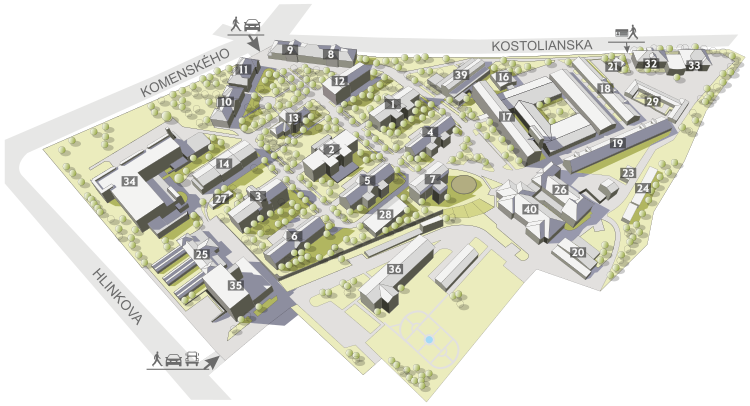
- a) Teaching premises and their technical equipment
-
Course
Characteristics of material and technical equipment
Location Andrology and artificial insemination
Material and equipment for andrological diagnostics and performance of artificial insemination thermostats, autoclaves, refrigerators, laminar boxes BSL2, PCR box, centrifuges, fluorescence microscope, culture equipment, deep freezing boxes, Elisa line.
P-17, P-18, P-19
Clinical Biochemistry
Material and equipment for biochemical analysis of tissues and hormones, autoclaves, refrigerators, BSL2 laminar boxes, PCR box, centrifuges, fluorescence microscope, culture equipment, deep freezing boxes, Elisa line.
P-35
Controlled reproduction
Material and equipment of the clinic, USG, X-ray, endoscopes,
P-17, P-18, P-19
Veterinary pharmacology
Pharmacology fully equipped laboratory
P-4
Veterinary physiology
Biochemical and haematological laboratory
P-8
Veterinary gynaecology
Material and equipment of the clinic, USG machines, X-ray, endoscopes, metabolite and hormone analyzers
P-17, P-18
Veterinary care and hygiene
Biochemical and haematological laboratory
P-3
Veterinary obstetrics
Material and equipment of the clinic, USG, X-ray, endoscopes, mobile X-ray
P-17, P-18
Internal diseases of livestock
Clinic equipment, USG, X-ray, endoscopes, Elisa line
P-17, P-19
Livestock nutrition
Laboratory, analysers for feed quality assessment
P-12
- b) Information resources
- Not provided yet.
- c) Distance learning, e-learning access and procedures
-
Description and scope of distance education in the study programme with per course. Access data, manuals of e-learning portals. Procedures for the transition from in-person to distance learning .
UVLF in Košice also provides distance learning for all courses via the MOODLE and MS Teams platforms. Each student can access manuals either in electronic form or in the form of video instructions .
- d) Partners involved in educational activities
-
Some activities are carried out in cooperation with the University's contractual partners, including organisations under the management of the State Veterinary and Food Administration of the Slovak Republic and private veterinarians.
- e) Social, sports, cultural, spiritual and community activities
-
UVLF in Košice provides excellent conditions for the above .
- f) Student mobility and placements
-
Students of the study programme of Veterinary Obstetrics and Gynaecology are guaranteed the opportunity to participate in mobility. The entire agenda, including the instructions and conditions for applying for mobility, conditions and rules for participation in mobility, is covered by the Vice-Rector for International Relations and Internationalisation and the organisational unit managed by her, which is the UVMP Mobility Office. The whole process requires coordination with the supervisor. Mobility is recommended after a certain part of the study plan has been fulfilled.
9. Required skills of the applicant and prerequisites
- a) Required abilities and admission prerequisites
-
These are laid down in Articles 1 and 2 of the Study Regulations of the UVMP in Košice, Part B, II. Part Organisation of studies.
- b) Admission procedures
-
They are laid down in Articles 3 and 4 of the Study Regulations of the UVMP in Košice, Part B, II. Part Organisation of studies.
- c) Admission results over the standard duration of study
-
Academic year Applicants Admitted Enrolled Graduates —
10. Feedback regarding the quality of education provided
- a) Monitoring and assessment of student feedback
-
- Procedures for monitoring and evaluating students' views on the quality of the study programme:
The students of UVMP in Košice can evaluate the quality of teaching anonymously through an anonymous questionnaire after graduation, where they evaluate the quality of a particular study programme and the quality of the lecturers who provide the course.
- b) Student feedback and measures to improve programme quality
-
The results of the evaluation of doctoral studies are part of the Annual Reports on Scientific and Research Activities at UVMP in Košice for individual AYs and Annual Reports on the Quality of UVMP in Košice for individual AYs. They are also presented at the Teachers' Meeting, which is held at the beginning of each academic year. In general, the principle that the results of the feedback are very important for drawing conclusions from the evaluations, which are implemented into concrete measures implemented with the aim of improving the quality of the study programme.
- c) Graduate feedback and measures to improve programme quality
-
The feedback and measures to improve the quality of the study programme are part of the Annual Reports on the Educational Activity at UVLF in Košice for individual academic years and the Annual Reports on the Quality of UVLF in Košice for individual academic years. As part of the measures to improve the quality of the study programme, the vice-rector for education, study advisors and coordinators of individual fields of science and research step in and address the issues resulting from the feedback.
11. Demonstration of long-term and continuous success in obtaining financial support
- a) Demonstration of long-term and continuous success in obtaining financial support
-
No.
Project number
From
To
Project name
Provider
Principal Investigator / Co-Principal Investigator
1
1/0613/13
2013
2015
Study on the effect of rooibos and yucca plants on ovarian function and metabolism in livestock
SGA
Assoc. Prof. Radoslava Vlčková, DVM PhD.
2
1/0600/14
2014
2017
Digestive proteinases and membrane-bound exopeptidases in larvae of house fly (Musca domestica) and green buzz fly (Lucilia sericata) used in larval therapy.
SGA
Assoc. Prof. Zuzana Kostecká, DVM PhD.
3
1/0366/15
2015
2017
Acute phase proteins as markers of pathological conditions of the reproductive apparatus, metabolic and inflammatory processes of organ systems in horses
SGA
Prof. František Novotný, DVM PhD.
4
APVV-16-0203
2017
2021
Therapeutic and preventive recolonization of the cutaneous ecosystem in equine dermatitis.
RDPA
Eva Styková, DVM PhD.
5
/0392/17
2017
2020
Effect of contaminants - products of the petroleum industry on ovarian function in different animal species. Use of medicinal plants to reduce the effect of these contaminants
SGA
Assoc. Prof. Radoslava Vlčková, DVM PhD.
6
1/0382/18
2018
2020
Study of the influence of metabolic syndrome on reproductive processes in mares
SGA
Prof. František Novotný, DVM PhD.
7
1/0204/20
2020
2023
Studying the mechanism of action of flaxseed on female gonadal and uterine functions of animals
SGA
Assoc. Prof. Radoslava Vlčková, DVM PhD.
8
1/0372/22
2022
2025
The use of beneficial microorganisms and their bioactive products in the elimination of skin biofilm infections
SGA
Eva Styková, DVM PhD.
12. Links to other relevant internal regulations and information regarding the study or the student of the study programme
- Relevant internal regulations and other information
If the window remains open, close this browser tab.